

On this page
01Wireless charging through a case: what works
Yes, wireless charging works through a case, as long as the case is non-metal and not too thick. The charger's coil creates a magnetic field that passes through plastic, silicone, TPU, leather, wood and carbon-fiber patterns just as it passes through the phone's own back glass.
What changes is efficiency. Every extra millimeter between the two coils weakens the coupling, so a thicker case means slower charging and more heat before it means no charging. Material matters far less than you'd expect, with one big exception: metal.
| Case type | Wireless charging? | Notes |
|---|---|---|
| Slim plastic, TPU or silicone | Yes | No noticeable difference on most pads |
| Leather or faux leather | Yes | Fine unless it's a folio with cards in the back flap |
| Magnetic (MagSafe-compatible) | Yes, and better aligned | Built-in magnets hold magnetic chargers on the coil |
| Rugged or military-style | Often slower, sometimes no | Thick backs and air gaps push coils apart |
| Wallet case with cards | Usually no | Cards add thickness and can be damaged |
| Case with a metal plate, ring or kickstand | No | Metal blocks the field and the pad shuts off |
| Battery case | Depends | Some pass wireless power through; many don't |
02How thick is too thick?
Pads are designed around a small gap. There's no single cut-off printed in the spec, but in practice cases up to about 3 mm at the back charge normally on almost anything, and many pads cope up to about 5 mm. Past that you're relying on a strong pad and perfect alignment.
Measure the back, not the edges.Rugged cases are often thick at the corners and much thinner behind the coil. The center of the back is the number that matters.
Watch for the soft symptoms of a case that's slightly too thick: charging that starts and stops, a phone that gets warmer than usual on the pad, or a full charge that takes noticeably longer than without the case. Those are the same signs our iPhone wireless charging fixes walk through.
Heat is the hidden cost. Energy that doesn't make it across the gap turns into warmth in the pad and the phone, and iPhones and Galaxy phones both slow or pause charging when the battery warms up. A thick case also insulates the back of the phone, so it holds that heat longer. If your phone often feels hot on the pad, a thinner case can make charging faster even though the pad hasn't changed.
03Magnetic chargers need a magnetic case
Apple's MagSafe Charger and Qi2 chargers use a ring of magnets to snap onto the phone. iPhone 12 and later (except the iPhone 16e) have the matching magnets inside. Put an ordinary case on top and the field still gets through, but the magnets are now several millimeters apart, so the charger holds weakly, slides, or drops off a vertical stand.
Regular case
- Charges on flat pads
- Weak hold on magnetic chargers and mounts
- Alignment is up to you
MagSafe-compatible case
- Magnet ring keeps the charger centered
- Strong hold on stands and car mounts
- Works on flat pads too
Wallet or folio case
- Cards must come out to charge
- Thick flap adds distance
- Magnetic chargers rarely hold
If you use magnetic accessories at all, a magnetic case is the one that does everything. For the background, see what is a MagSafe case and Qi2 vs MagSafe.
04What blocks wireless charging completely
- Metal plates for car mounts. The thin steel disc you stick inside a case is the most common culprit. Pads detect it as a foreign object and stop.
- Ring holders and kickstands with metal parts. Anything metal over the coil area will block charging and can heat up.
- Cards and key fobs. Apple warns against putting credit cards, security badges, passports or key fobs between an iPhone and a MagSafe charger, since magnetic strips and RFID chips can be damaged.
- Aluminum or metal-backed cases. Unless the back has a non-metal window over the coil, they won't charge.
- Stacked accessories. A grip on top of a case on top of a sticker adds up fast.
Swap the metal plate for a MagSafe-compatible case. The built-in magnets hold magnetic car mounts and still let the phone charge on a pad at home.
05Android phones and cases
Everything above applies to Galaxy and Pixel phones on flat Qi pads. The difference is magnets. Recent Galaxy S models are sold as Qi2 Ready, meaning the phone supports Qi2 but needs a magnetic case to snap onto Qi2 chargers. Without one, the charger has nothing to grab. Our explainers on MagSafe for Android and whether Samsung has MagSafe cover which models work and how.
06Will your case work? A quick test
If your current case fails two or more of those, it's the case, not the charger. A slim magnetic case is the upgrade that fixes alignment, hold and heat at the same time.
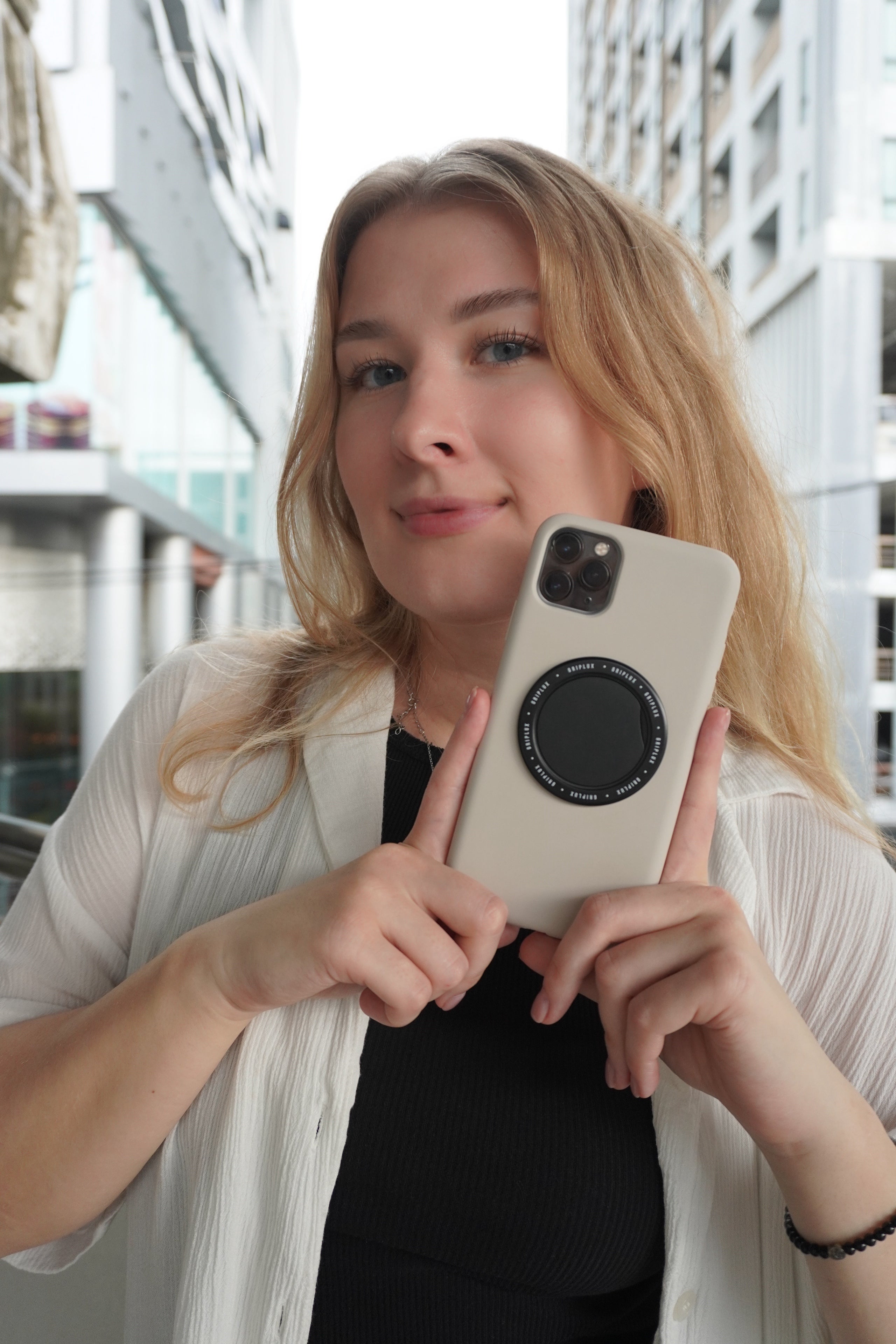
Magnetic cases with thin backs, so both flat pads and magnetic chargers work properly.


Questions people ask
Can you wireless charge with a thick case?
Often, but more slowly. Cases up to about 3 mm at the back charge normally on most pads, and many pads manage around 5 mm. Beyond that, charging can stop and start or fail, and the phone runs warmer.
Does a phone case slow down wireless charging?
A slim case makes little difference. A thick case increases the gap between the coils, which reduces efficiency, adds heat and can slow charging noticeably. A magnetic case can actually help on magnetic chargers by keeping the coils aligned.
Do MagSafe chargers work through a non-MagSafe case?
They can charge through a thin one, but the magnets won't hold well, so the charger can slide off-center or fall off a stand. For a reliable hold and full speed, use a MagSafe-compatible case with built-in magnets.
Can I wireless charge with a PopSocket on my case?
Usually not with the grip in place. Standard grips add too much thickness over the coil. Remove the grip, use a removable magnetic grip, or charge by cable.
Is it safe to wireless charge with a card in my case?
No. Cards add thickness, can trigger the charger's foreign object detection, and Apple warns that cards, badges and key fobs between the phone and a MagSafe charger can be damaged. Take them out first.