

MagSafe is one of those Apple words that gets used for a charger, a phone feature, a case, a wallet and a laptop port, sometimes in the same sentence. Underneath all of them is one idea, and once you see it the rest makes sense.
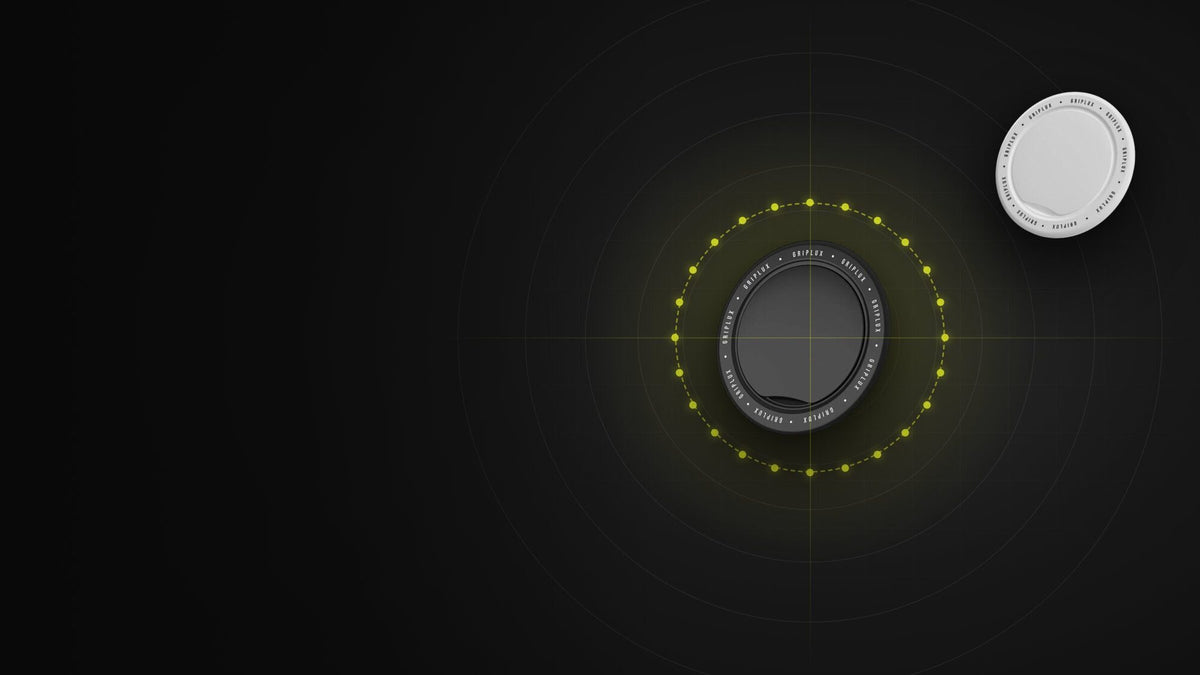
MagSafe means "magnetic" plus "safe." It's Apple's name for connections held in place by magnets that line things up exactly and let go without damage. On iPhone 12 and newer, MagSafe is a ring of magnets around the wireless charging coil, plus an alignment magnet, an NFC reader and a magnetometer. Together they make chargers and accessories snap into the right spot every time.
The name started in 2006 on the MacBook Pro, whose magnetic power cord popped off instead of dragging the laptop to the floor when someone tripped on it.
Why is it called MagSafe? A short history
Apple introduced the original MagSafe power connector on January 10, 2006, with the first MacBook Pro. The problem it solved was simple: trip over a laptop's power cord and the laptop goes flying. MagSafe held the plug on with magnets, so a tug pulled the plug out instead of the computer off the table. Wikipedia notes the idea came from the magnetic cords on deep fryers and Japanese countertop cookers, which exist for the same reason.
- January 2006MagSafe power connector debuts on the MacBook Pro.
- June 2012MagSafe 2, a thinner version, arrives with the Retina MacBook Pro and MacBook Air.
- 2015 to 2016Apple phases MagSafe out of laptops in favor of USB-C charging.
- October 2020The name returns on iPhone 12 as a magnetic wireless charging and accessory system.
- October 2021MagSafe 3 brings magnetic charging back to the 14 and 16-inch MacBook Pro.
- 2023 onwardQi2, the open wireless charging standard, adopts MagSafe's magnetic design.
So the iPhone version kept the name for the same two reasons: magnets do the lining up, and the connection releases cleanly when pulled.
How does MagSafe work on iPhone?
Apple's spec sheet for current iPhones lists MagSafe as four parts. Tap each one to see what it does and why it's there.
Inside the back of a MagSafe iPhone
Simplified layout, not to scale. The magnets sit under the back glass, so none of this is visible from the outside.
Put together: the ring pulls an accessory into place, the alignment magnet sets its rotation, the coil underneath is now exactly lined up with the charger's coil, NFC tells the iPhone what just attached, and the magnetometer helps the phone account for the extra magnets nearby. None of it needs you to do anything except bring the two close together.
Why alignment matters so much for wireless charging
Wireless charging moves power between two flat coils using a magnetic field. The more the coils overlap, the more of that field lands where it should, and the less turns into heat. With a flat pad, the phone lands wherever you drop it. MagSafe removes the guesswork. Drag the slider to see how quickly overlap falls off when a coil is off-center.
How much do the coils overlap?
Geometry only: two identical 40 mm coils (an illustrative size; Apple doesn't publish the coil diameter). Overlap is the exact shared area of two circles. Real-world efficiency also depends on coil design and distance, so treat the comment as a qualitative guide.
This is also why a MagSafe charger can reach 25W on the newest iPhones while a basic Qi pad is held to 7.5W. The faster speeds only make sense when the phone can trust that the coils are lined up.
What does MagSafe actually do for you?
- Faster, cooler wireless charging. Up to 25W on the iPhone 17, 18 Pro, 16 Plus and 16 Pro Max with Apple's current MagSafe Charger and a 30W adapter; 15W on iPhone 12 to 15. Our MagSafe model list has every phone's figure.
- Accessories that snap on. Wallets, grips, stands, car mounts, tripod mounts and battery packs all use the same ring. You can swap them in seconds.
- Accessory recognition. Apple's own cases and wallets use NFC so the phone shows a matching animation, and Find My can remember where an Apple MagSafe wallet was detached.
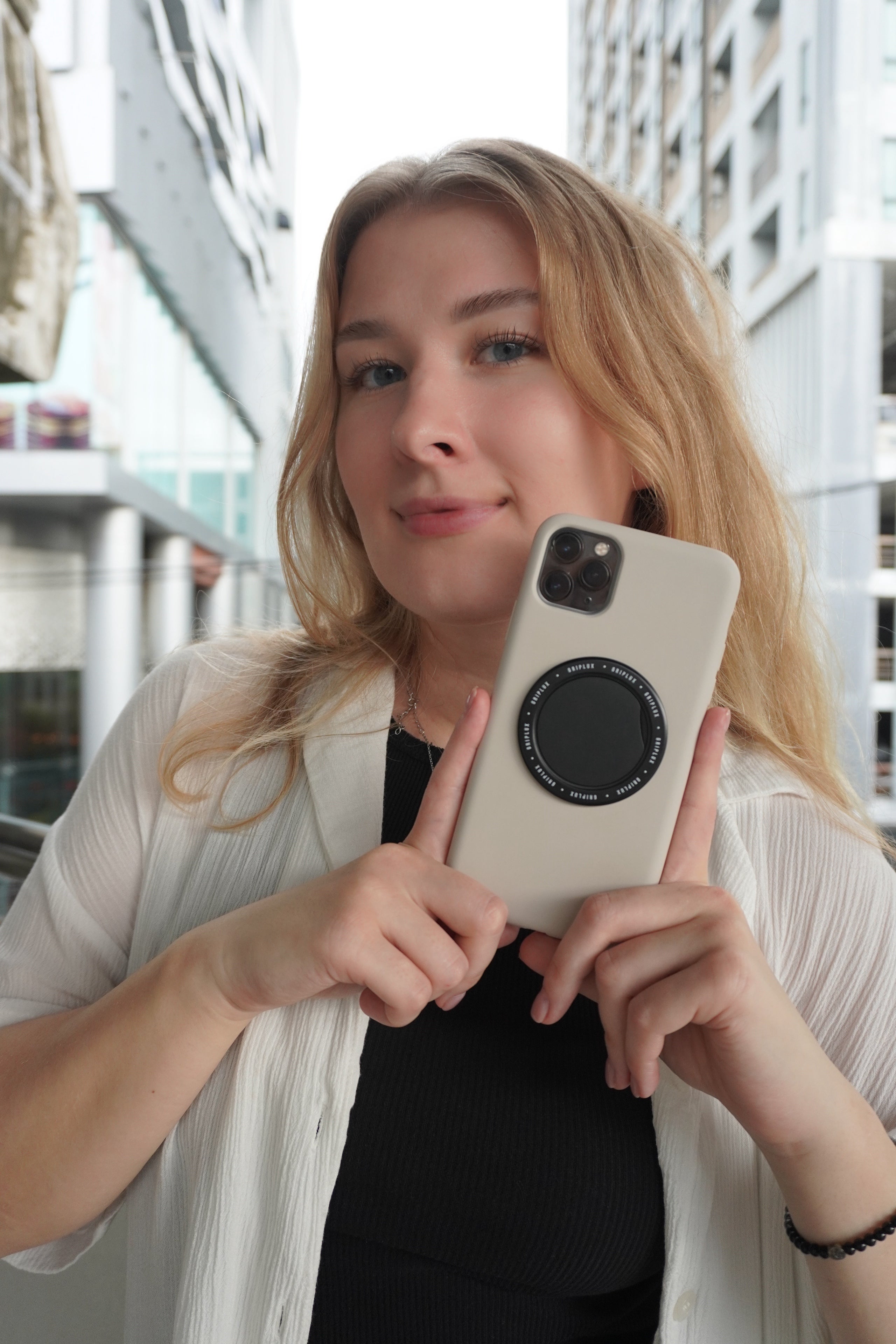
- One-handed use. A magnetic grip turns a slippery slab into something you can hold securely without a strap. That's the accessory we make, so we're biased, but it's also the most common reason people buy a MagSafe case.
MagSafe is just a magnet stuck to the back of the phone.
A magnet ring registered to the charging coil, an orientation magnet, NFC identification and a magnetometer, designed as one system.
MagSafe on iPhone vs MagSafe on MacBook
| iPhone MagSafe | MacBook MagSafe 3 | |
|---|---|---|
| What it is | Magnetic wireless charging and accessory system | Magnetic wired power connector |
| Wired or wireless | Wireless | Wired (cable to a port) |
| Since | iPhone 12, October 2020 | October 2021 (original MagSafe from 2006) |
| Accessories | Cases, wallets, grips, mounts, stands | Charging cable only |
| Interchangeable? | No | No |
Same name, same "magnetic and breakaway" idea, completely different hardware. A MagSafe laptop cable won't do anything for an iPhone.
Is MagSafe the same as Qi2?
Close, not identical. When the Wireless Power Consortium announced Qi2 in January 2023, its Magnetic Power Profile was built on MagSafe, with Apple contributing the design. So Qi2 chargers use the same magnet geometry and snap onto iPhones and MagSafe cases the same way. MagSafe is Apple's branded, Apple-certified version with its own accessory identification. Qi2 vs MagSafe breaks down where speeds and features differ in 2026.
Is MagSafe worth it?
If your iPhone has it, you already paid for it; the question is whether to use it. It's worth it if you charge on a nightstand or desk (drop the phone, it's charging, no fumbling) or if you'd use even one magnetic accessory. It matters less if you only ever charge by cable and don't want anything on the back of your phone.
The one real catch is cases. A regular case puts a gap between the phone's magnets and your accessories, and the hold gets weak. If you use a case, get one with its own magnet ring. Our guide to what a MagSafe case is explains the difference and how to spot a real one.

MagSafe accessory · black or white
Luxi Snap Grip
$31.99
- Snaps onto any MagSafe iPhone or MagSafe case
- Listed at 14.4 g and 2.8 mm thick folded, rotates 360°
- Pulls off in a second when you want to charge
Free shipping on every order.

Magnet ring built in, so accessories hold through the case. iPhone 14 to 16.
Shop MagSafe cases
Magnetic or adhesive: which grip suits how you use your phone.
Read the comparisonPut the magnets to work.
The Luxi Snap Grip rides on the MagSafe ring you already have. Snap it on, snap it off, no adhesive.

MagSafe meaning FAQ
What does MagSafe mean?
MagSafe combines "magnetic" and "safe." It's Apple's name for magnetic connections that align precisely and release without damage. On iPhone it refers to the ring of magnets around the wireless charging coil that chargers and accessories snap onto.
How does MagSafe work?
A ring of magnets in the iPhone pulls the charger or accessory into place, an alignment magnet sets its rotation, and the charging coils end up perfectly lined up. NFC identifies Apple accessories and a magnetometer detects that something attached.
Is MagSafe just a magnet?
No. The magnet ring is the visible part of the idea, but MagSafe also includes an alignment magnet, accessory-identification NFC and a magnetometer, all positioned around the wireless charging coil so they work as one system.
Does MagSafe charge faster than regular wireless charging?
Yes. Standard Qi charging on iPhone is 7.5W. MagSafe reaches 15W on iPhone 12 to 15 and up to 25W on the iPhone 17 and 18 Pro lines and the 16 Plus and 16 Pro Max, with a large enough adapter. Wired USB-C is still faster on newer models.
Why is it called MagSafe?
The name comes from the 2006 MacBook Pro power connector, which used magnets so the cord would pop off safely if someone tripped on it instead of pulling the laptop to the floor. Apple reused the name for the iPhone 12's magnetic system in 2020.
Is MagSafe the same as Qi2?
Qi2's magnetic design is based on MagSafe, so Qi2 chargers snap onto iPhones and MagSafe cases the same way. MagSafe is Apple's certified version with its own accessory identification; wattage and certification details differ.
Is MagSafe bad for the battery?
No more than any charging. Wireless charging makes a little more heat than wired, and heat is what ages batteries, but MagSafe's alignment reduces waste heat compared with a misaligned pad. We cover it in detail in our MagSafe battery health guide.
Which iPhones have MagSafe?
Every iPhone from the iPhone 12 onward except the iPhone SE (2nd and 3rd generation) and the iPhone 16e. The iPhone 17e added MagSafe in 2026.
Keep reading
Troy BaconTroy runs GripLux, an accessory brand owned by Global Trading Partners LLC (ownership details). GripLux makes MagSafe cases and the Luxi Snap Grip.
Sources
- Wikipedia, MagSafe (January 10, 2006 introduction; MagSafe 2 in June 2012; USB-C phase-out; MagSafe 3 on October 18, 2021).
- Apple, iPhone 18 Pro technical specifications (MagSafe: magnet array, alignment magnet, accessory identification NFC, magnetometer).
- Apple Support, How to use your MagSafe Charger with iPhone (wattage by model).
- Wikipedia, MagSafe (wireless charger).
- 9to5Mac, WPC works with Apple on new Qi2 standard based on MagSafe.
Share:
Why Does My iPhone Say "Slow Charger"? What It Means and How to Fix It
Aramid Fiber Phone Cases: What They Are, Kevlar vs Carbon Fiber, and Who They're For