

On this page
01Why your wireless charger is blinking
A wireless charger blinking almost always means it has detected a problem and stopped sending power. The pad isn't broken. It's refusing to charge until whatever tripped it (metal, poor alignment, low input power or heat) is sorted.
There's no universal light code. Every brand picks its own colors and rhythms, so treat this table as the common conventions and confirm with your pad's manual or listing:
| What the light does | Usually means | Try |
|---|---|---|
| Blinks once or twice when plugged in, then goes steady or off | Power-on self-test | Nothing. That's normal |
| Fast blinking, often red or amber, with the phone on it | Foreign object detected (metal, card, metal plate in a case) | Remove the object or case, re-seat the phone |
| Slow blinking with the phone on it | Phone off-center or not detected | Re-center; remove a thick case |
| Blinks the moment it's plugged in, with nothing on it | Adapter too weak, or a cable or pad fault | Swap to a stronger USB-C adapter and cable |
| Steady, then blinking after a while | Overheat protection | Take the phone off, let both cool |
| Flickers on and off every few seconds | Charging keeps starting and stopping (alignment, case or a vibrating phone) | Re-center, try without the case, turn on Silent |
02Fix a blinking pad in this order
-
Take everything off the pad
Lift the phone off and look. Coins, keys, paper clips and earbuds with metal parts all trigger foreign object detection, which is a safety feature: metal in a charging field heats up fast.
-
Check the back of the phone
Metal mount plates (for magnetic car mounts), ring holders, pop-out grips with metal bases, card wallets and battery cases all cause blinking. Try once with no case at all.
-
Put the phone dead center
On flat pads, the coil is a small target. Phones with tall camera bumps can rock or slide. Align the middle of the phone's back with the middle of the pad, screen up.
-
Swap the power adapter
Most 10W and 15W pads need a quick-charge or USB-C PD adapter, typically 18W or more. An old 5W USB-A cube or a laptop port can't supply enough, so the pad blinks or charges at a crawl.
-
Try a different cable
If the pad blinks with nothing on it, the cable between pad and adapter is the next suspect. Use the one it came with, or a known-good USB-C cable.
-
Let it cool
Unplug the pad for 10 minutes. Move it off soft surfaces and out of direct sun, where pads overheat and cycle.
-
Test with another device
Put a different Qi phone or earbuds case on it. If that charges, the issue is your phone or its case. If nothing charges and the light still blinks, the pad is likely faulty.
03Foreign object detection, briefly
Qi-certified chargers watch how much power they send versus how much the phone reports receiving. If the numbers don't add up, something else is absorbing energy. That's usually metal, and metal on a wireless pad gets hot enough to burn. So the pad shuts off and flashes a warning.
This is also why a thin magnet-ring sticker or a MagSafe-compatible case is fine but a steel mounting plate is not. The magnets in a proper magnetic case are arranged around the coil, while a steel plate sits right on top of it. If you use a magnetic car mount and a wireless pad at home, a case with magnets built in covers both.
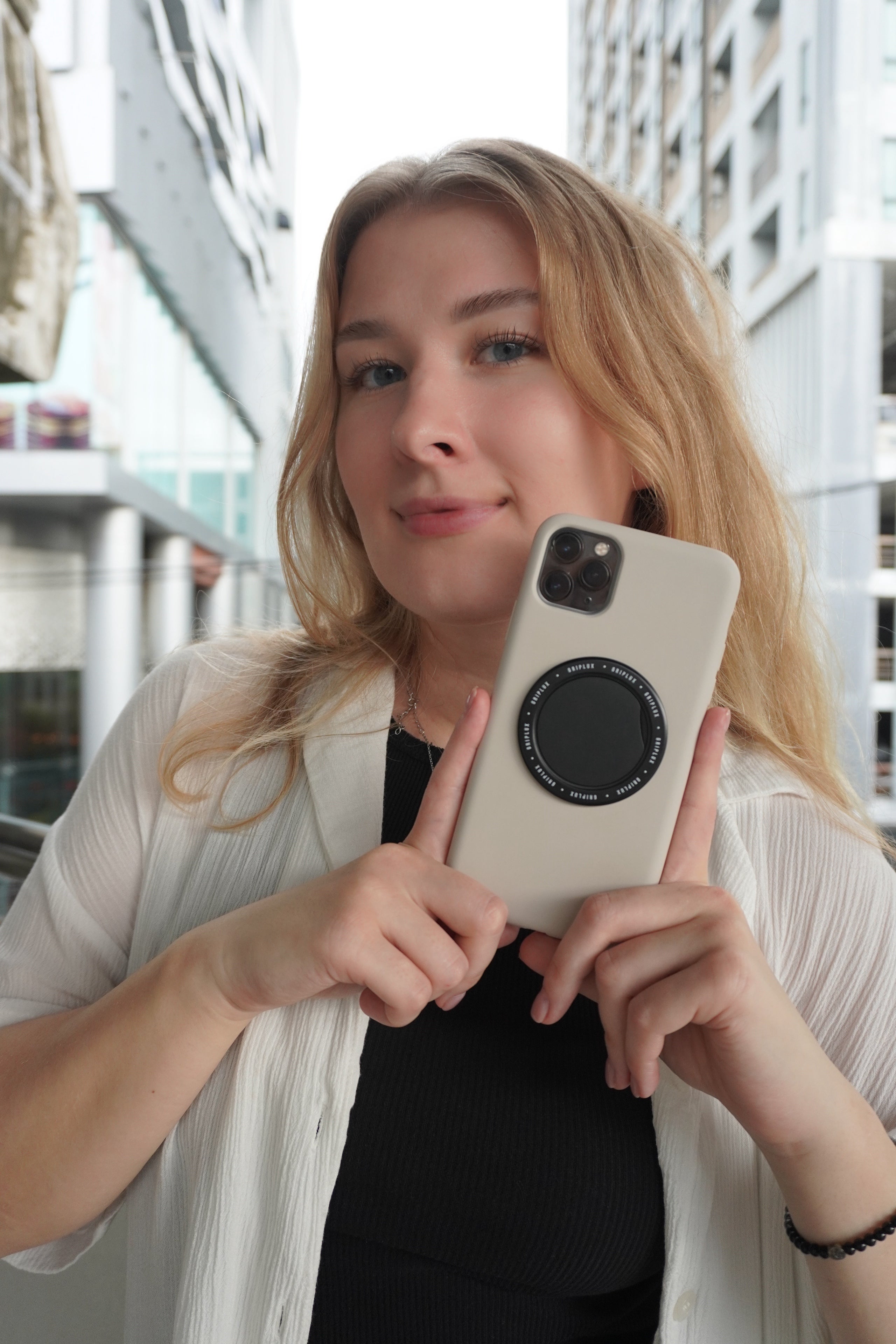
Pop sockets and grips are a common surprise. Many have a metal disc in the base for magnetic mounting, and even the plastic ones add enough height to stop the pad detecting the phone. If you like a grip, a removable magnetic one comes off in a second when you charge.
If the pad or phone is too hot to hold, or you smell something, unplug it. A blinking warning is fine; a scorching pad isn't. Don't keep forcing a charge.
04When your phone is the reason
Some blinking has nothing to do with the pad. An iPhone won't charge wirelessly while it's plugged in by cable. A phone with a cracked back may not couple properly. Notifications can vibrate a phone off-center overnight, which looks like random blinking.
Phone-specific fixes live in their own guides: iPhone not charging wirelessly, Samsung wireless charging not working and MagSafe charger not working. If your case might be the issue, see does wireless charging work through a case.
05Is the charger dead?
If you're replacing it, a magnetic charger removes the alignment guesswork for iPhone 12 and later (except the 16e, which has no magnets). Pair any pad with a proper USB-C adapter so it never starves for power.
A charger is only as steady as the power behind it. These pair well with a 20W or larger USB-C PD adapter.


Questions people ask
Why is my wireless charger blinking blue?
On many pads a blinking blue light means standby, a fault, or that the phone isn't detected, depending on the brand. Re-center the phone, remove the case and check the adapter. The manual for your exact model will confirm what blue means.
Why is my wireless charger blinking red or green?
Red or amber blinking most often signals foreign object detection or overheating. Green blinking can mean charging in progress on some pads and an error on others. Clear the pad, let it cool, and check the brand's light guide.
Can a phone case make a wireless charger blink?
Yes. Cases with metal plates, kickstands, ring holders or card pockets can trip foreign object detection. Very thick cases can stop the pad detecting the phone. Test once without the case to find out.
Why does my wireless charger blink when plugged into my laptop?
A laptop USB port usually supplies too little power for a 10W or 15W pad. Plug the pad into a wall adapter that matches its requirement, typically an 18W or larger quick-charge or USB-C PD adapter.
Is a blinking wireless charger dangerous?
The blinking itself is a warning, not a hazard. It usually means the pad has stopped charging to protect itself. If the pad is very hot, smells, or is cracked, unplug it and replace it.