

On this page
01Four kinds of desk stand
The best desk phone stand is the one that matches what you do with your phone at your desk. Glancing at messages, taking calls and keeping it charged all pull you toward a different design.
| Type | Best for | Watch out for |
|---|---|---|
| Fixed or tilt-adjustable aluminum | Glancing at notifications, watching while you work | Sits low; not ideal for video calls |
| Height-adjustable arm | Video calls, recording, standing desks | Takes more space; cheaper ones wobble when you tap |
| Foldable pocket stand | Laptop bags, hot desks, travel | Light, so it tips with big phones in portrait |
| Wireless charging stand | One less cable, always topped up | Phone must line up with the coil; thick cases can stop it |
If charging is the main goal, skip ahead to our desk charging setup; it covers wattage, 3-in-1 stations and cable routing. This page is about the stand itself.
02What separates a good stand from a cheap one
- Weight and footprint. A heavy base is what stops a stand tipping when you tap the top of the screen. Metal stands win here.
- Angle range. Look for a hinge you can tilt from almost upright to a shallow reading angle. Fixed angles suit one use and annoy you for the rest.
- Lip depth. The front lip has to clear a thick case. Shallow lips are fine for slim cases but let rugged ones slide off.
- Charging gap. A cutout in the lip lets you plug in a USB-C cable while the phone stands. Without one, you're stuck with portrait-only or no charging.
- Rubber pads. Silicone on the cradle and base protects the phone and keeps the stand from skating across a glass desk.
+Aluminum stands
- Heavy and stable
- Look tidy on a desk for years
- Hold phones and small tablets
–Trade-offs
- Cost more than plastic
- Bulkier to carry
- Cold to the touch, if that bothers you
03Pick by your desk day
Adjustable aluminum
- Tilt to any angle
- Fits phones and small tablets
- Cable gap for charging while upright
Height-adjustable
- Raises the camera toward eye level
- Often adds a fill light or ring
- Bigger footprint
Charging stand
- Phone charges whenever it's docked
- Magnetic versions snap into place
- Works best with thin or magnetic cases
Taking a lot of calls? Height matters more than anything else, and our phone stand for video calls guide explains why. On an iPhone, any stand that holds it sideways while charging also turns it into a desk clock and widget display; see how to use StandBy mode.
If you only prop your phone up occasionally, a kickstand case or a magnetic grip that folds into a stand covers it without taking desk space. Our kickstand case vs phone grip comparison helps choose.
04Phone only, or phone and tablet?
Many desk stands are sold for both, and a wide cradle that holds an iPad mini or a small Android tablet is handy if you swap devices through the day. The catch is balance. A stand sized for a tablet often has a taller back support that sits awkwardly behind a phone, and the hinge is set stiffer to carry the extra weight, so fine angle tweaks take more effort.
- Phone only: pick a compact stand. It takes less desk space and the cable gap lines up with your phone's port.
- Phone and small tablet: a dual-use aluminum stand works, as long as the back support adjusts or folds lower.
- Full-size tablet or laptop too: buy separate stands. One stand trying to do everything does none of it well.
- Foldables: unfolded, a Galaxy Z Fold or Pixel Fold behaves like a small tablet, so a wider cradle helps.
05Set it up so you actually use it
One habit worth building: put the phone face-up on the stand at an angle you can read from your chair, and turn on Focus or Do Not Disturb during deep work. A phone that's visible but quiet is easier to ignore than one buzzing face-down under a notebook.
Adjustable metal stands for the main desk, a foldable for the bag, and a charging dock if you want the phone topped up.


06Desk stands vs grips that stand
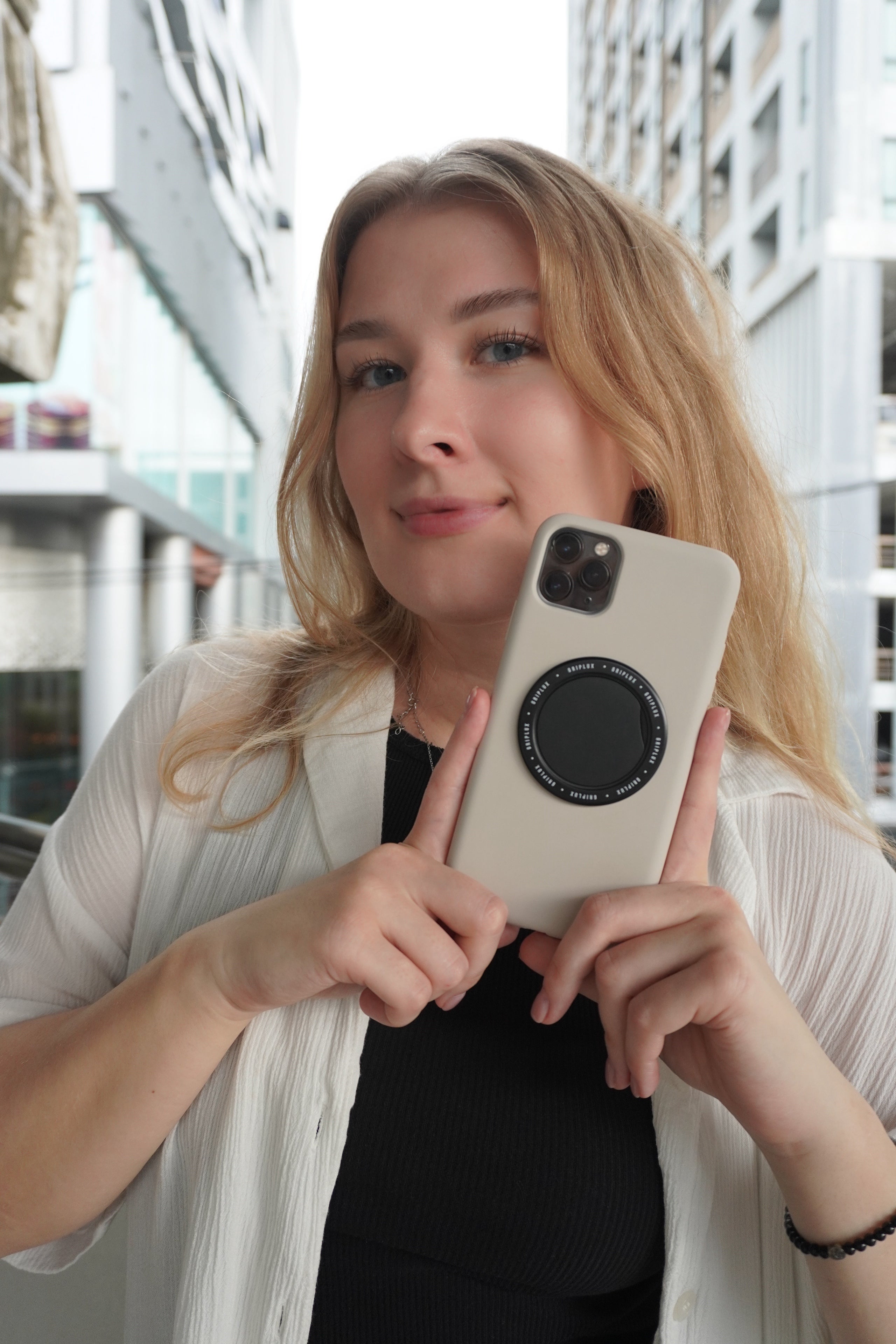
A few grips double as small stands, like our camera-style MagSafe-compatible grip and desk stand. They're handy for hot desks and coffee shops, but they sit low and can't match a weighted stand for stability when you're tapping at the screen all day.
Our suggestion: a proper stand on the desk you use every day, and a grip on the phone for everywhere else. The Luxi Snap Grip, our signature grip, snaps off in a second when you dock the phone, so the two never get in each other's way. Compare types in the phone grip guide.
Questions people ask
What should I look for in a desk phone stand?
A heavy base so it doesn't tip, an adjustable angle, a front lip deep enough for your case, and a gap for a charging cable. Metal stands tick all four more often than plastic ones.
Is an aluminum phone stand better than plastic?
Usually. Aluminum is heavier, so it's more stable when you tap the screen, and it keeps its shape for years. Plastic stands are lighter and cheaper, which makes them better for carrying around.
Can I charge my phone on a desk stand?
Yes. Most stands have a cable cutout so you can plug in while it stands. A wireless charging stand does it without the cable, as long as your case is thin or magnetic.
What angle should a desk phone stand be?
Roughly 60 to 75 degrees from the desk works for most people reading notifications while seated. Go more upright for video calls and lower for typing on the screen.
Will a desk stand fit a phone with a thick case?
Check the depth of the front lip. Most stands handle slim and standard cases. Rugged and wallet cases need a deeper lip or a clamp-style holder.