

On this page
01Why the stand's height matters most
A good phone stand for video calls puts the camera level with your eyes, so you're looking across at people instead of down at them. Everything else (lighting, framing, sound) is easier once the height is right.
Lay a phone flat or prop it low on a desk and the lens looks up at your chin and ceiling. Raise it to eye level and the same call looks like a conversation. That's why a fixed, low stand that's great for watching videos is often the wrong pick for calls.
- Camera height
- Level with your eyes, or a touch above
- Distance
- About an arm's length (roughly 2 to 3 feet)
- Tilt
- Screen close to vertical, tipped back only slightly
- Framing
- Head and shoulders, with a little space above your head
- Light
- In front of you, beside or behind the phone
Seated at a desk, most people need the phone raised several inches off the desktop to hit eye level. A stack of books under a fixed stand works as a free fix if you only take calls now and then.
02Three kinds of stand that work for calls
Height-adjustable desk stand
- Telescoping or hinged arm to reach eye level
- Stable, heavy base
- Stays set up between calls
Mini tripod with phone clip
- Pan and tilt to frame a whiteboard or your hands
- Packs into a bag
- Short on a desk unless you add height
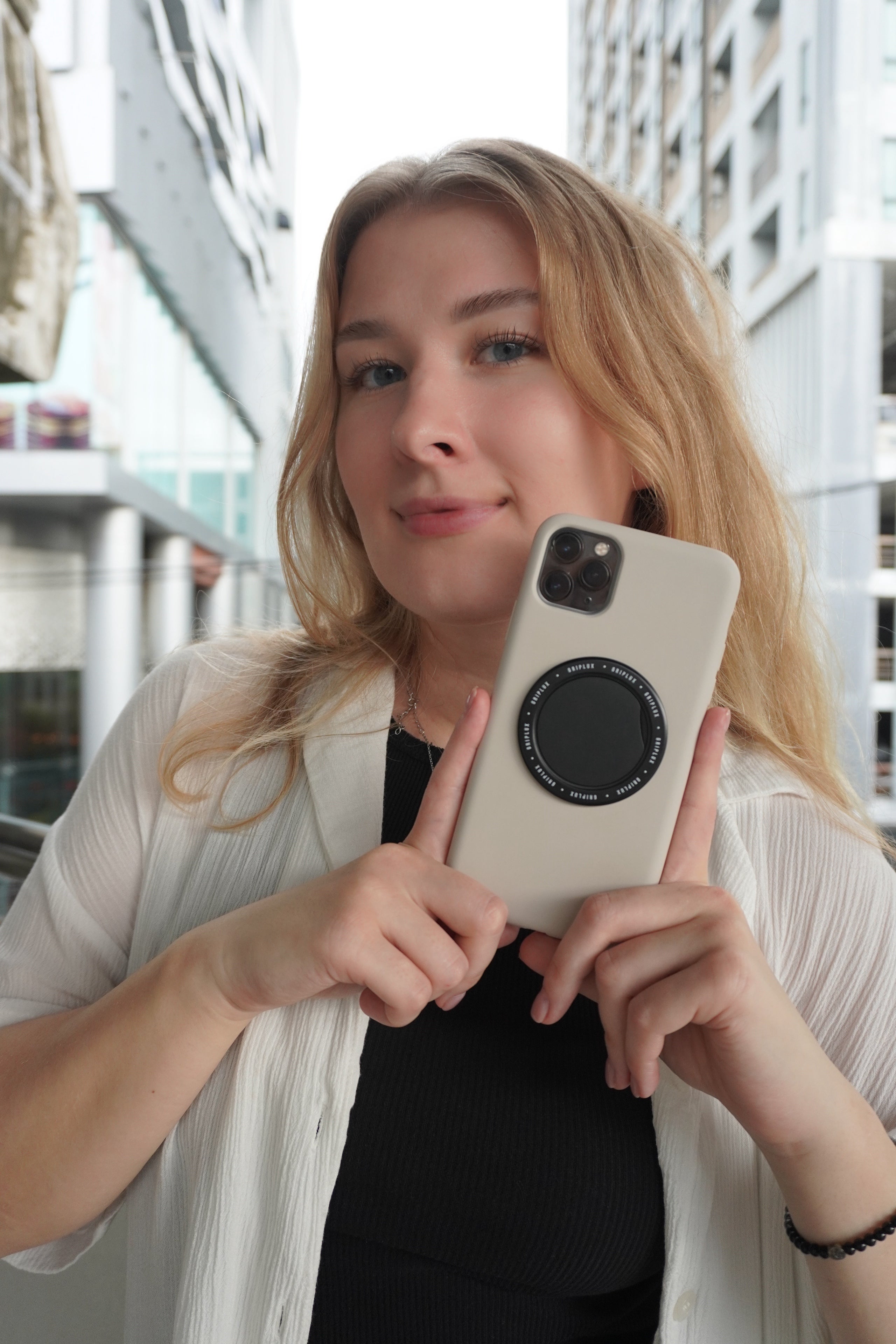
Magnetic grip or wallet with stand
- Already on your phone
- Sits low, so the angle is rarely ideal
- Fine for a five-minute check-in
If you're at a desk all day anyway, our desk phone stand guide compares fixed aluminum, adjustable and charging stands. Recording rather than calling? Phone mounts for recording covers taller setups.
03Portrait or landscape?
| Call type | Orientation | Why |
|---|---|---|
| FaceTime or WhatsApp with family | Portrait | Fills the other person's phone screen |
| Zoom, Teams or Meet with a laptop crowd | Landscape | Matches their wide windows; fewer black bars |
| Two people on your side | Landscape | Room for both faces without leaning in |
| Showing your hands, a whiteboard or a product | Landscape, tripod | Easier to pan and frame |
| Telehealth or a quick interview | Either, at eye level | Height matters more than orientation here |
04Lighting: the cheap upgrade
Phone cameras handle dim rooms better than they used to, but they still struggle when the brightest thing in frame is behind you. A window at your back turns you into a silhouette. Swap sides of the desk so the window is in front of you, or beside the phone.
- Daylight from the front is free and the most flattering. Sheer curtains soften harsh sun.
- A lamp just behind the phone works at night. Bounce it off a wall if it's glaring.
- A clip-on fill light fixes uneven light anywhere and runs on its own battery. Start at its lowest setting.
- Turn off overhead lights if they cast shadows under your eyes and use a front light instead.
On an iPhone, open Control Center during a FaceTime call, and in many other video apps, to find video effects such as Portrait background blur. They're worth a try before you buy anything.
05Sound: the part people forget
People forgive a slightly soft picture. They don't forgive echo or a voice that fades in and out. Moving the phone onto a stand an arm's length away puts more distance between you and its microphones, so the room starts to matter more.
- Wired or Bluetooth earbuds fix most problems at once: the mic sits close to your mouth and the other side can't hear their own voice echo back through your speaker.
- Soft furnishings help. A bare room with hard floors echoes. A rug, curtains or even a sofa behind you calms it down.
- Don't block the bottom mics. Some stands and clips cover the bottom edge of the phone. Leave the speaker and mic holes clear.
- Mute when you're not talking on group calls. Keyboard clatter carries further than you think.
06Keep it charged without overheating
Video calls are one of the heaviest jobs a phone does: camera, screen, mic and data all at once. An hour-long call can take a big bite out of the battery, and the phone gets warm doing it.
For long calls, plug in a cable rather than relying on a wireless charging stand. Wireless charging adds its own heat on top of the call's, and a phone that's already warm may slow charging or dim the screen to protect itself. More on that in phone overheating while charging. Take a thick case off for marathon sessions.
Height-adjustable and tripod-style holders, plus a small light for dim rooms.


Questions people ask
How high should my phone be for a video call?
Level with your eyes, or slightly above. At that height you look straight into the camera instead of down at it, which is far more flattering and feels more like a real conversation.
How far away should the phone be on a video call?
About an arm's length, roughly 2 to 3 feet. That frames your head and shoulders without distorting your face. Move back a little if you talk with your hands.
Should I video call in portrait or landscape?
Portrait for phone-to-phone calls like FaceTime with family. Landscape for Zoom, Teams or Meet, where most people are on laptops, and whenever two of you are in frame.
Can I charge my phone during a long video call?
Yes, and you should for calls over half an hour. A cable runs cooler than a wireless stand, which matters because the call already makes the phone warm.
Do I need a ring light for video calls?
Usually not. Facing a window or putting a lamp behind the phone is enough for most calls. A small clip-on light helps in dim rooms or if you're on camera for work every day.