

On this page
01The phone case mistakes that cost the most
The most expensive phone case mistakes aren't about style. They're about fit and coverage: a case that doesn't match your exact model, or one that leaves the screen and camera as the first thing to touch the ground.
1. Buying for the wrong model
Phones in the same family differ by a few millimeters and a camera layout, which is enough to ruin a fit. Pro and Pro Max are different sizes. Year-to-year changes catch people too: a Pixel 9 case doesn't sit right on a Pixel 10, and a Galaxy S25 case doesn't always suit an S26. Find your exact name in Settings > General > About on iPhone or Settings > About phone on Android, then save it in Find My Phone so the store filters for you.
Listings that say "iPhone 14–17" usually mean you choose your model from a menu at checkout. Check that menu actually contains yours.
2. No raised lip around the screen or camera
Lay the phone face-down on a table with the case on. If the glass touches the table, the case won't save it in a flat drop. Same test for the camera: on its back, the lenses should sit above the surface, held up by the case's camera ring.
3. Ignoring the buttons
Covered buttons should click crisply; mushy ones get annoying in a week. On an iPhone 16 or newer, also check how the case handles the Camera Control button. Some use an open cutout, some a conductive cover that passes your swipe through. See Camera Control button cases.
02Feel and grip mistakes
4. A case so slick it causes the drops
Glossy hard plastic looks great and slides off car seats, couch arms and tilted tables. If you've caught your phone mid-slide more than once, choose a matte, rubberized or silicone finish, or add a grip. A case that prevents the fall does more than one that survives it.
5. Choosing too thin for how you live
A paper-thin case is a scratch cover, not drop protection. That's fine for desk workers who rarely drop a phone. It's the wrong buy for anyone on concrete floors, ladders or playgrounds all day. Be honest about your last year of drops. Slim vs rugged helps you place yourself.
6. Picking clear without knowing it will yellow
Most soft clear cases are TPU, which yellows with UV light and skin oils over months. Hard polycarbonate clear backs hold up better, and frosted finishes hide the tint. The full story is in clear case vs colored case.
03Magnet and charging mistakes
7. A plain case under magnetic accessories
Every millimeter of plastic between the phone's magnets and an accessory weakens the hold. A thin plain case may hold a charger but drop a wallet; a thicker one lets a car mount fling the phone over the first pothole. If you use any MagSafe-compatible gear, buy a case with its own magnet ring.
8. Trusting "MagSafe compatible" without checking the magnets
Some cheap cases are only thin enough to let charging through, with no magnets at all. Look for a visible ring on the inside or back, or wording like "built-in magnets" or "magnetic". Not "supports MagSafe charging" alone.
9. Adding metal, cards or kickstands behind the coil
Metal plates, card slots and ring kickstands on the back can block wireless charging, push a magnetic charger off-center and interfere with tap-to-pay. Check case blocking Apple Pay if payments have become hit-and-miss since you changed cases.
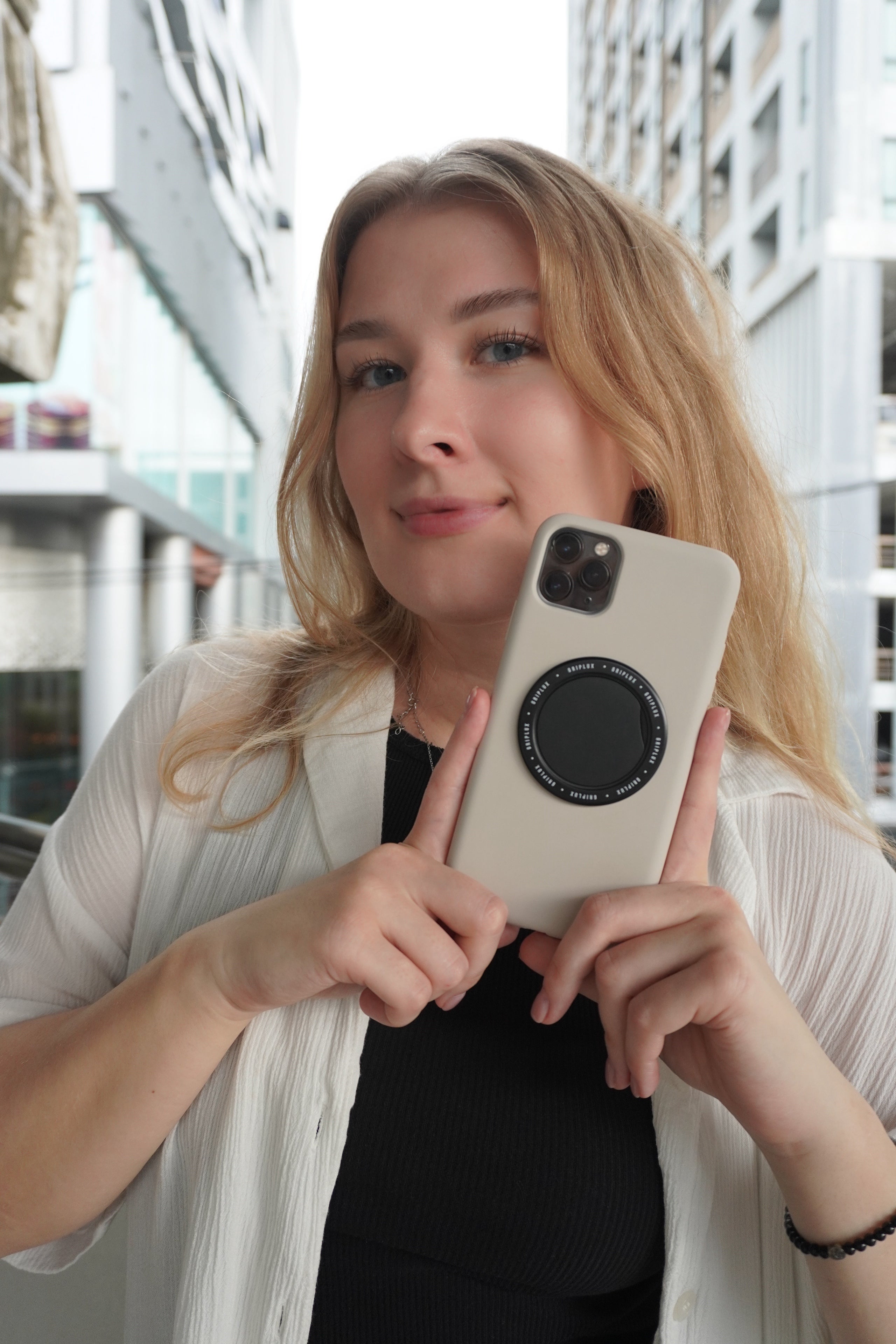
GripLux lines for iPhone 14–16 with built-in magnet rings, in a smooth thin finish and a grippy rubberized one.


04Spot them on the product page
| Mistake | What to look for in the listing |
|---|---|
| Wrong model | Your exact model in the title or model menu, not just the family |
| No lip | Side photos showing the edge above the screen and a ring around the camera |
| Slippery | "Matte", "rubberized", "silicone" or a textured back |
| Too thin | Thickness or weight listed, corner photos, any drop rating with its test height |
| Yellowing | "TPU" clear back (yellows) vs "polycarbonate" or frosted |
| No magnets | "Built-in magnets" and a photo of the ring |
| Charging blocked | No metal plate, card pocket or kickstand over the center |
05Not a mistake: spending less
A higher price doesn't fix any of the nine mistakes above. A modest case that fits, has a lip and grips well beats an expensive one that slides off the table. Where money does buy something, like magnets, aramid fiber or better coatings, our guide to how much a phone case should cost breaks it down.
The phone case finder asks four questions and points you to a style that avoids most of these traps.
Questions people ask
Can I use a case from a different phone model?
Rarely well. Even phones that look similar differ in camera position, button placement or a millimeter of height. A near-miss case can block a lens, press a button or fall off in a drop. Buy one listed for your exact model.
Why does my phone case have a raised edge?
The raised lip keeps the screen off the ground when the phone lands face-down on a flat surface. A case without one leaves the glass to take the hit. Look for the same lip around the camera bump.
Do all MagSafe-compatible cases have magnets?
No. Some only mean the case is thin enough for MagSafe charging to pass through. Without magnets, chargers won't snap on and wallets slip off. Check for "built-in magnets" and a visible ring.
How do I know if a case is too tight?
A new case should be snug, but if buttons press themselves, the screen protector edges lift, or you can't get it off without force, it's wrong for your model or protector. See how to get a tight case off.
Is a clear case a bad idea?
Not if you know what you're buying. Soft TPU clear cases yellow over months; hard polycarbonate and frosted clear backs stay clear longer. Expect to replace a soft clear case sooner than a colored one.