

On this page
01Can a phone case block Apple Pay?
A phone case blocking Apple Pay is rarer than people think. NFC, the radio that handles tap-to-pay, passes straight through plastic, rubber, leather and fabric. When a case does cause problems, it's almost always because of metal, a shielding layer, or the cards stored in it.
NFC is deliberately short range: a few centimeters at most. That keeps payments secure, but it also means anything that adds distance or puts a conductive layer between the antenna and the reader can tip it over the edge. A thick rugged case alone rarely does it. A thick case plus a wallet plus a grip sometimes does.
Where you tap matters too. Apple's instructions are to hold the top of your iPhone near the reader, because that's where the iPhone's NFC antenna is. Many failed taps are just the middle of the phone held against the terminal. On most Galaxy and Pixel phones the antenna sits further down the back, closer to the middle; your phone's manual shows the exact spot.
Timing matters as much as position. On an iPhone with Face ID, double-click the side button, glance at the phone, then hold it near the reader until you see Done. Pulling it away the moment the screen changes can cut the transaction short, which looks exactly like a case problem but isn't. Transit gates are faster and less forgiving, so if a gate fails with a wallet attached, the wallet's cards are the first suspect.
02What blocks NFC and what doesn't
| Case or accessory | Blocks tap-to-pay? | Why |
|---|---|---|
| TPU, silicone, polycarbonate | No | Radio-transparent plastics |
| Leather and leather-look | No | No metal unless there's a plate inside |
| Aramid (Kevlar-type) fiber | No | Aramid is non-conductive |
| Real carbon fiber | Sometimes | Carbon fiber conducts electricity and can weaken the signal |
| Aluminum or metal back | Often | Metal shields the antenna |
| Adhesive metal plate or ring | Sometimes | Depends whether it sits over the antenna |
| Bank cards in a wallet case | Often | The reader detects two cards and refuses both |
| RFID-blocking wallet | Sometimes | Its shield can cover part of the phone's antenna area |
Card clash, the sneaky one
If you keep a contactless bank card or transit card in a wallet case, the payment terminal can pick up the card and the phone at the same time. Most readers then decline or charge the card instead of the phone. Transit gates are especially fussy about this. Move the cards, or use a wallet with shielding between the cards and the reader.
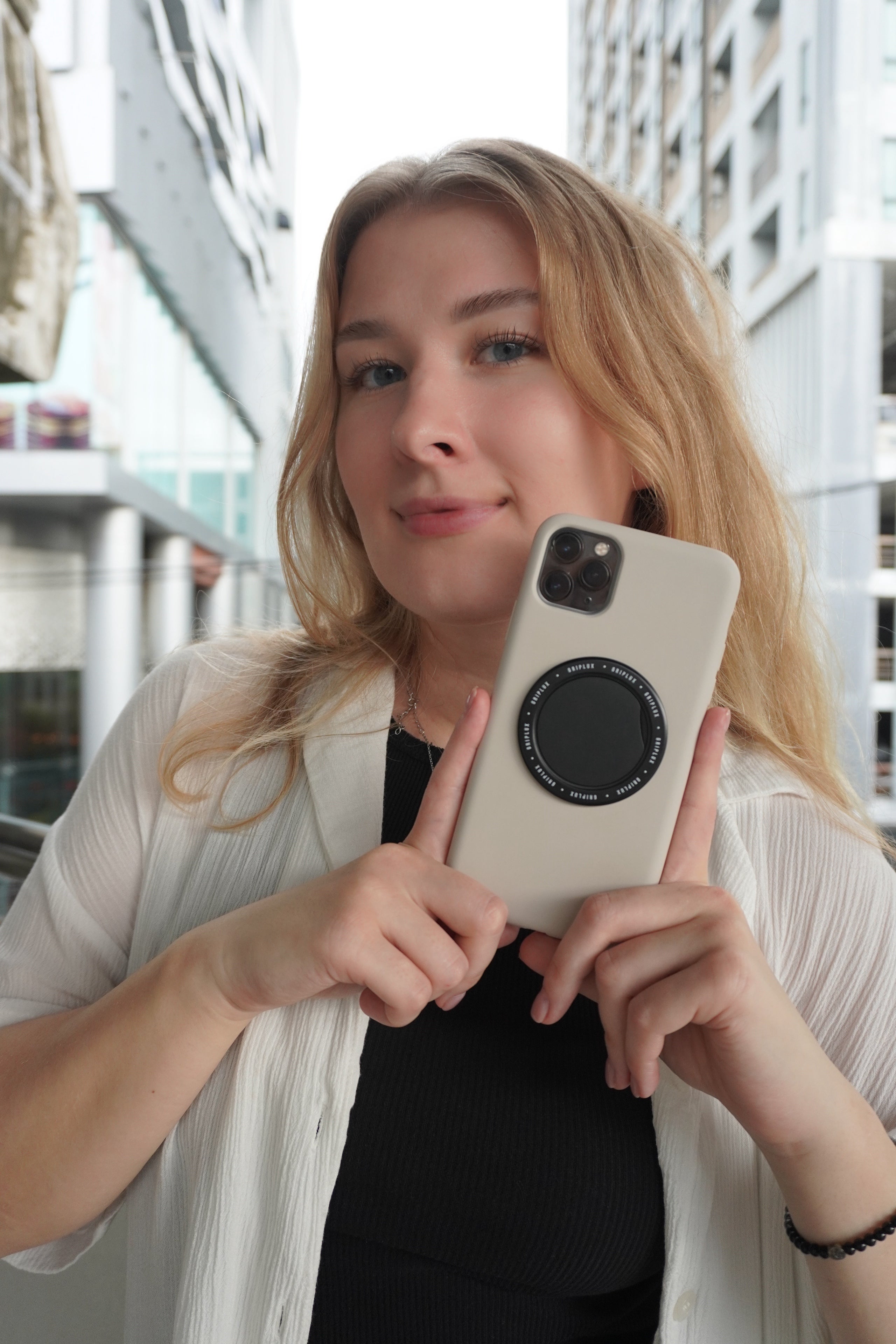
Grips and stands are worth a mention too. A plastic grip won't block anything, but one mounted on a metal ring or plate can, especially on Android phones where the antenna sits mid-back. If you use a grip, a magnetic one that snaps onto a magnetic case avoids the metal plate entirely.
03Find the culprit in five checks
-
Tap with the right part of the phone
iPhone: top edge to the reader, held still for a second or two. Android: the middle of the back, flat against the reader.
-
Remove wallets, grips and stands
Take off anything snapped or stuck to the back and try again. This catches most card-clash and metal-plate problems.
-
Try with the case off
If payments now work every time, the case itself is the issue, usually a metal layer you can't see.
-
Check NFC is on (Android)
Samsung: Settings > Connections > NFC and contactless payments. Pixel: Settings > Connected devices > Connection preferences > NFC. iPhone has no NFC switch to check.
-
Check the card in Wallet
If it fails with nothing on the phone, the problem is the card, the bank or the terminal. Try another card or another store.
In practice, the case is rarely the cause on its own. A wallet with cards in it or a stick-on metal plate is the usual answer, and removing it fixes payments straight away.
04Keeping a wallet and tap-to-pay together
You don't have to choose between carrying cards and paying with your phone. A magnetic card wallet sits in the middle of the back, below the iPhone's NFC antenna, so tapping with the top of the phone usually works fine. The catch is card clash if the wallet holds contactless cards with no shielding.
+Magnetic wallet: what works
- Sits clear of the iPhone's top-edge antenna
- Pops off in a second when a reader is fussy
- Shielded or anti-skimming wallets stop card clash
- Works through a magnetic case
–What to watch
- Unshielded contactless cards can clash with the phone
- Adds thickness on Android, where the antenna is mid-back
- Too much metal in a cheap wallet can weaken the signal
For more on the trade-offs, see wallet case vs MagSafe wallet and whether magnetic wallets demagnetize cards.
Built-in magnets instead of metal plates, plus card wallets with shielding to prevent card clash. Test any wallet at a checkout once before relying on it.


Questions people ask
Does a thick case block Apple Pay?
Thickness alone rarely does. NFC reaches a few centimeters, and most cases add only a couple of millimeters. A thick case combined with a wallet and grip can push the phone too far from the reader. Remove the add-ons first.
Can a MagSafe-compatible case stop Apple Pay working?
No. The magnets in a magnetic case don't block NFC, and the magnet ring sits in the middle of the back while the iPhone's NFC antenna is at the top. Problems come from metal plates or cards in an attached wallet.
Why does Apple Pay work without my case but not with it?
The case probably has metal in it: an aluminum frame or back, a metal plate for magnetic mounts, or a metallic decorative layer. Or there are contactless cards stored in it. Try a plain plastic or silicone case to confirm.
Do RFID-blocking wallets block Apple Pay?
They can if the shielding covers the phone's NFC antenna. On an iPhone, a wallet in the middle of the back usually leaves the top-edge antenna clear. Tap with the top of the phone, and if it still fails, remove the wallet to pay.
Where is the NFC antenna on an iPhone?
At the top of the phone. Apple's instructions are to hold the top of your iPhone near the contactless reader until you see Done and a checkmark.