

On this page
01How to protect your new phone, layer by layer
The best way to protect your new phone is in layers: a case for the corners, glass for the screen, habits that stop the drop in the first place, and a plan for the day something still goes wrong. Each layer is cheap. Skipping any one leaves a gap the others can't fill.
| Layer | Stops | Doesn't stop | Rough cost |
|---|---|---|---|
| Case | Corner and edge impacts, back glass cracks, scuffs | Face-down drops onto edges or gravel | Low |
| Screen protector | Scratches, and many face-first cracks | Hard corner hits that flex the whole phone | Very low |
| Habits and grips | The drop itself | Theft, water | Free to low |
| Backup and insurance | Losing your photos and the full repair bill | Nothing physical | Free to monthly fee |
Do it the first evening. A phone carried bare for a few days while the case is in the mail is the easiest risk to avoid, so order the case and glass alongside the phone if you can.
02Layer 1: a case that actually covers the risky parts
What matters isn't thickness, it's coverage. Look at three spots before you buy:
- A raised lip around the screen. It should stand slightly proud of the glass so a face-down drop on a flat floor lands on the case, not the screen.
- A raised ring around the camera. Modern camera bumps stick out, so they're often the first thing to touch a table or pavement.
- Covered corners. Corners take most of the energy in a fall. A slim case with firm corners beats a thick case with soft, open ones.
If you'll use magnetic chargers, wallets or mounts, buy a magnetic case now rather than later. A plain case weakens the hold on iPhones and on Pixel 10 and 11 models, and Galaxy phones need the case to supply the magnets at all.
Our own slim lines. Check the photos for the lip and camera ring, and note the MagSafe-compatible ones keep snap-on gear working.


Torn between thin and tough? Slim vs rugged covers where each makes sense, and the phone case finder picks one for you in four questions. Newer phone? Browse by model, such as iPhone 17 Pro cases.
03Layer 2: glass on the screen and the camera
A case protects the frame and back, not the front. Drop a phone face-first onto a step edge or gravel and the lip won't help, because the point of impact is in the middle. A tempered glass protector takes that hit and costs very little to replace.
-
Fit glass before the case
Install the protector on a bare phone in a steamy bathroom (less dust in the air). A box or frame kit puts it in the right spot without guesswork.
-
Then put the case on
If the case edge lifts the glass, the two aren't compatible. Look for "case-friendly" glass that stops just short of the curve.
-
Decide on the camera
If your case has a tall camera ring, lens protectors are optional. With a thin case, add them; scratched lens glass shows up in every photo as haze or flare.
-
Re-register Face ID or fingerprint if needed
Face ID is unaffected. Under-display fingerprint readers on Android often work better after you delete and re-add your print with the glass on.
Step-by-step help: how to install a screen protector. Not sure which type? How to choose a screen protector compares them.
04Layer 3: habits that stop the drop
Most damage happens in a handful of predictable moments: pulling the phone out of a tight pocket, setting it on a car roof, filming one-handed, or reaching for it in bed. You can design those moments out.
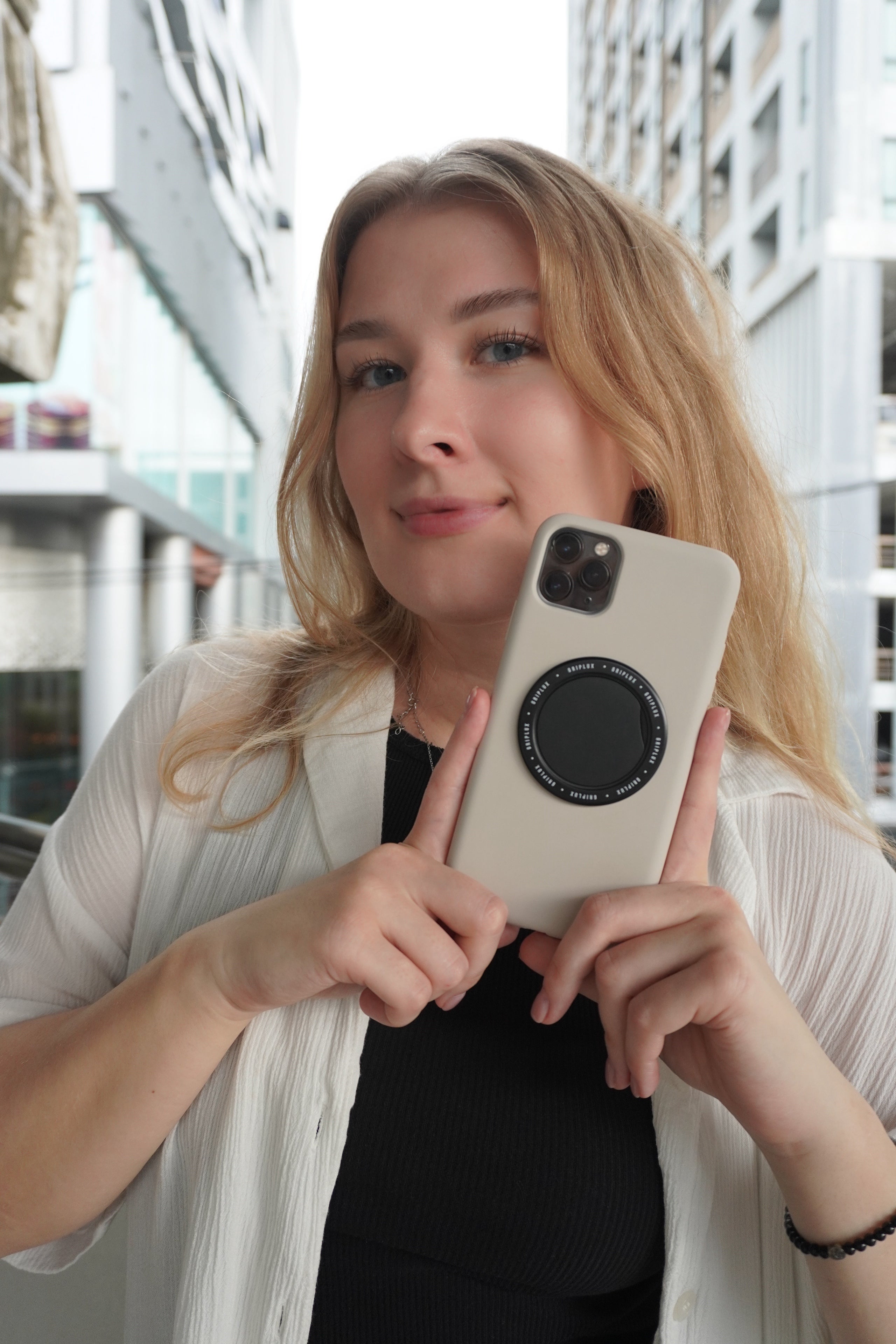
A snap-on grip like the Luxi Snap Grip gives your fingers something to hold, which matters most with big phones. Find it with our other magnetic grips.
05Layer 4: plan for loss, theft and the big crack
Some things a case can't fix. Five minutes in settings means a lost or broken phone costs you money, not your photos.
- Turn on tracking. iPhone: Settings > [your name] > Find My. Android: Google's Find Hub, plus Samsung's own Find My Mobile on Galaxy phones.
- Turn on cloud backup. iPhone: Settings > [your name] > iCloud > iCloud Backup. Android: Settings > System > Backup on a Pixel, or Settings > Accounts and backup on a Galaxy.
- Turn on theft protection. On iPhone, Stolen Device Protection lives under Settings > Face ID & Passcode. It adds a delay and Face ID check before key settings can be changed away from familiar places.
- Write down your carrier PIN and phone's IMEI somewhere that isn't the phone. You'll need them to report a theft.
Is phone insurance worth it?
It depends on how you treat phones and what you already have. Before you pay for a plan, check two free options: some credit cards include cell phone protection when you pay your monthly phone bill with them, and some home or renters policies cover phones. Then compare the maker's plan (AppleCare+, Samsung Care+, Google's Preferred Care) with your carrier's by deductible, theft cover and claim limits.
+Insurance makes sense if
- You've cracked a screen in the past two years
- You financed an expensive phone and can't absorb a replacement
- You want theft and loss covered, not just damage
–Probably skip it if
- Your credit card already covers the phone
- You keep phones in a case with glass and rarely drop them
- You'd rather self-insure: put the monthly fee aside instead
Questions people ask
What should I do first with a new phone to protect it?
Fit a screen protector, then a case, before you carry the phone anywhere. Then turn on device tracking and cloud backup. Those four steps take about 15 minutes and cover the most common ways phones get damaged or lost.
Do I need a screen protector if I have a case?
Usually yes. A case lip protects against flat drops, but a face-down fall onto an edge, step or gravel hits the middle of the screen. Glass protectors are cheap to replace; screens aren't.
Is a thin case enough protection?
For everyday drops from pocket height, a thin case with covered corners and a raised lip does well. If you work on concrete, climb ladders or drop phones often, go thicker or add a grip or strap to stop the drop itself.
Should I keep the phone box?
Keep it for a while. It's handy for resale and for warranty returns, and the IMEI is printed on the label, which helps if the phone is stolen.
Does a case affect wireless charging?
A slim case usually doesn't. Thick cases, metal plates and card slots on the back can slow or stop it. If you use magnetic chargers, choose a magnetic case. More in does wireless charging work through a case.