

On this page
01What a first-phone case has to handle
Buy a case with thick or air-cushioned corners and a lip that rises above the screen and camera. That's what stops the two most common kid breakages: a corner landing on concrete and a face-down drop off a table. A thin fashion case won't cover either.
Think of it as layers. The case handles corners and edges, the glass protector takes face-down hits and scratches, and a lanyard or grip stops the drop from happening at all. Kids will defeat any one layer on its own. All three together cover most of what a school year throws at a phone, and the parts that break are cheap to replace.
A hand-me-down phone often has a battery that's already worn. Before buying a case for it, check its health in iPhone battery health or Samsung battery health. Not sure which model it is? See how to tell which iPhone you have.
02Match the case to the kid
| Kid | Case style | Add-on | Why |
|---|---|---|---|
| Younger kids, first phone for pickups and calls | Rugged or tri-proof armor case | Crossbody lanyard | Small hands, hard floors, and phones left on playground benches |
| Tweens, phone goes everywhere | Air-corner or rugged case | Wrist strap or lanyard | Drops while walking and texting; backpacks full of keys and bottles |
| Teens who care how it looks | Slim magnetic case with a raised lip | Magnetic grip | They'll take a bulky case off; a grip prevents the slip that causes most drops |
| Sporty kids | Rugged case | Sports armband or crossbody | Phone rides along at practice and on bikes |
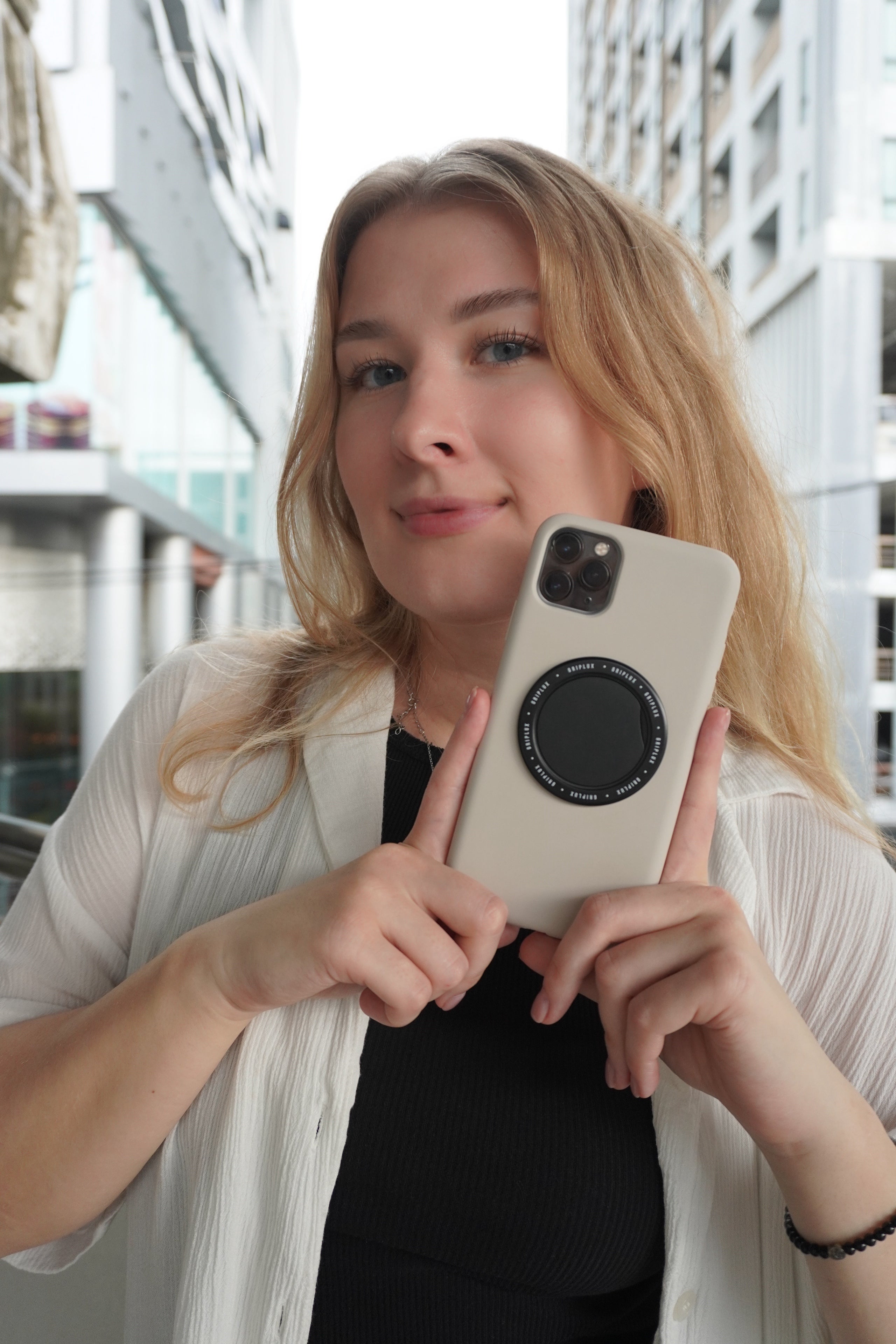
Teens are the hardest sell. A case they find ugly ends up in a drawer. A slim magnetic case with a proper lip, plus a grip like the Luxi Snap Grip, is a protection setup they'll keep using. For the full slim-versus-tough trade-off, see slim vs rugged phone cases.
03Lanyard or grip: stop the drop instead
Most drops start with a slip from a hand or a pocket. A tether or grip fixes that before the case has to do anything.
Crossbody lanyard
- Phone stays on their body all day
- Hard to leave behind
- Needs a case with lanyard holes or a tab
Magnetic grip
- Secure one-handed hold for photos and texting
- Doubles as a stand
- Needs a magnetic iPhone or a magnetic case
Choose a lanyard with a detachable or breakaway connector for younger kids, and skip neck-style straps for climbing and sports. Our guide to whether phone lanyards are safe goes through the details.
04Set up the phone in ten minutes
-
Fit the screen protector first
Clean the screen, line up the glass and press from the center out. Our install guide covers the dust tricks.
-
Add the case and check the lip
Lay the phone face-down on a table. If the glass touches the table, the case's lip is too low.
-
Attach the lanyard or grip
Clip the lanyard to the case tab, or center the grip on the magnetic ring so it doesn't block the camera.
-
Turn on location sharing
On iPhone, add the phone to Family Sharing and use Find My. On Android, set it up through Google Family Link so you can see where it is.
-
Set limits
On iPhone, use Settings > Screen Time. On Android, Family Link handles app approvals and screen time.
A rugged case for newer iPhones, a lanyard case, a protector multi-pack and a standalone crossbody strap. Check model fit in each title.


05What not to bother with
Spend where it counts. The case and the screen protector do almost all the work, and the protector is the part that gets replaced most. A mid-priced rugged case plus a multi-pack of glass beats a premium case with no spare. Our guide to how much a phone case should cost has realistic ranges.
- Folio wallet cases. Kids don't carry cards, and the flap gets torn off.
- Glossy clear cases on a rough-and-tumble kid. They scuff and yellow fast. Pick a solid or frosted color.
- Expensive cases for a cheap hand-me-down phone. A solid mid-price case and a spare protector are the better spend.
- Waterproof cases for everyday use. They're bulky and fiddly. Save them for the pool or beach.
Need a charger to go with it? Kids lose cables constantly, so a spare braided cable from our cables collection is money well spent.
Questions people ask
What is the most protective phone case for kids?
A rugged or armor-style case with thick corners and a raised lip around the screen and camera. Pair it with a tempered glass screen protector. Together they handle corner drops and face-down falls, the two most common ways kids break phones.
Do kids need a screen protector if the case is rugged?
Yes. A rugged case protects edges and corners, but a face-down landing on gravel or a sharp toy can still reach the glass. A tempered glass protector cracks first and costs far less to replace than a screen.
Are phone lanyards safe for kids?
Crossbody and wrist lanyards are a good way to stop drops and lost phones. For younger kids, choose one with a detachable connector and avoid neck straps during sports or climbing.
What color phone case is best for kids?
Bright or solid colors. They're easier to spot in a backpack or under a car seat, and they hide scuffs better than clear cases, which also tend to yellow.
How often should I replace my kid's phone case?
When the corners crack, the lip wears down or the case stretches loose. A loose case can pop off in a drop. Replace the screen protector as soon as it cracks.