

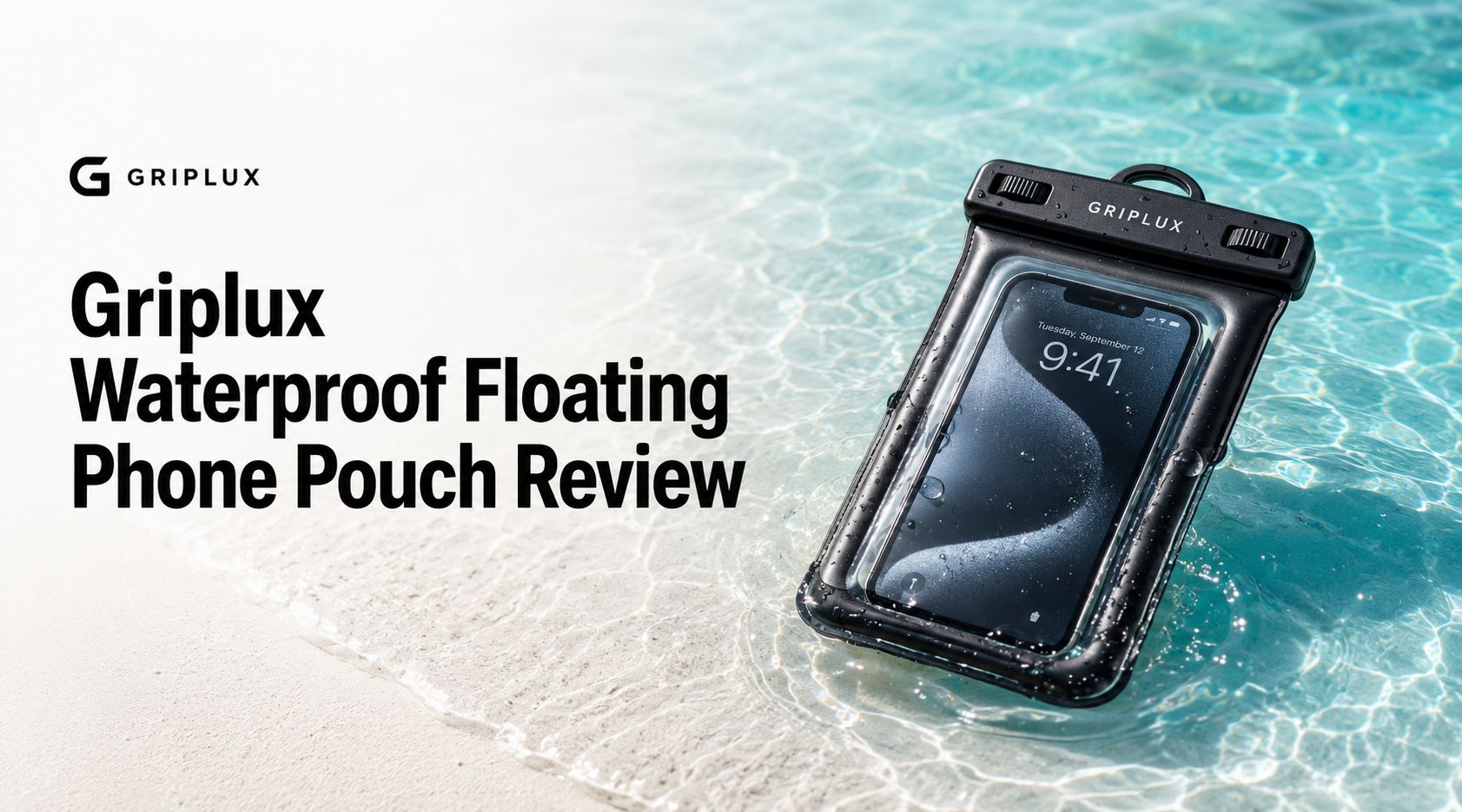
You are standing at the edge of a pool, phone in hand, trying to decide whether to leave it on a towel where anyone can grab it or risk bringing it closer to the water. That is the exact problem a floating phone pouch is built to solve, and Griplux has one in its lineup that we are putting under a proper review.
Quick answer: The Griplux Waterproof Floating Phone Pouch is a $29.99 pouch built for swimming, snorkeling, boating, and outdoor use. It fits phones up to 6.8 inches, weighs just 90 grams, and is designed to keep your device dry, floating, and accessible through a touchscreen-friendly window.
Why a Floating Pouch Is Different From a Regular Case
A regular phone case, even a durable one, is not built to survive being dropped in a pool or dunked at the beach. Water finds its way into ports and speaker grilles fast, and once it does, the damage is often immediate. A floating phone pouch takes a completely different approach. Instead of relying on tight seams around a rigid shell, it uses a sealed, flexible enclosure that keeps water out entirely, and it is built with enough buoyancy that if you drop it in the water, it floats back to the surface instead of sinking.
That second part matters more than people expect. A waterproof case that protects your phone but sinks straight to the bottom of a lake has not really solved the problem.
What Is Actually in the Griplux Pouch
-
Exterior dimensions of 9.5 by 5.0 inches, roomy enough to handle most modern phones comfortably
-
Interior space that fits devices up to 6.8 inches, covering the large majority of current phone sizes, including bigger models like the iPhone 16 Pro Max
-
Weighs just 90 grams (0.2 lbs), light enough that it does not feel like extra baggage when you are already carrying towels, sunscreen, and everything else for a day at the water
-
MagSafe-ready design, so it works well alongside the rest of a MagSafe-based setup even though it functions independently of any case
-
$29.99, in Black
A Real Scenario Where This Actually Helps
Picture a day at the lake with friends. You want photos, but you also want to actually get in the water without leaving your phone unattended on a towel where it could get sandy, wet from a splash fight, or just wander off with the wrong person. Slide the phone into the pouch, seal it, and hang it around your neck or clip it to a bag. You can still take photos through the clear window, answer a text if you need to, and if it slips off the dock into the water, it floats instead of dropping straight to the bottom.
That is the entire value proposition in one scenario: peace of mind without leaving the phone behind entirely.
Where the Pouch Makes the Most Sense
-
Swimming and snorkeling, where a normal case offers zero protection and a dry bag without floating capability risks losing the phone entirely if it slips away
-
Boating and kayaking, where the phone needs to survive splashes and the occasional unexpected dunk
-
Hiking and camping in wet conditions, protecting against rain and humidity rather than full submersion activities
-
Beach days, where sand and dust are just as much of a threat as water itself
Pouch or Case? A Quick Note
If your day-to-day risk is scuffs, drops on a hard floor, or general wear and tear, a pouch is not the right tool. It is built specifically around water exposure and floating protection, not everyday impact resistance the way a case like Griplux's Ultra Thin or Kevlar lines are. For a full breakdown of when a pouch makes more sense than a waterproof case, see our dedicated comparison guide.
A Word on Waterproof Ratings
Griplux lists the pouch with IPX8-level waterproof protection on its product page, which generally refers to protection against continuous submersion beyond one meter. That said, with any waterproof pouch, it is smart to do a quick dry test before trusting it with your phone. Seal the pouch with a piece of tissue or paper towel inside, submerge it briefly in a sink, and check that the paper stays completely dry. This takes less than five minutes and confirms the seal is working properly before you rely on it at the beach or pool.
Caring for the Pouch Between Uses
A little bit of maintenance goes a long way with any waterproof enclosure. Rinse the pouch with fresh water after use in salt water, chlorine, or sandy conditions, since residue left on the seal over time can affect how tightly it closes. Let it air dry fully before storing it, ideally with the seal open so moisture does not get trapped inside. Avoid folding or creasing the seal area repeatedly in the same spot, since that is typically the first place wear shows up on any flexible waterproof pouch.
Checking the seal before every trip, not just the first time, is the habit that actually prevents a bad surprise. Seals on flexible pouches wear gradually, and a pouch that sealed perfectly on your last beach trip is not guaranteed to seal the same way six months later without a quick check.
Frequently Asked Questions
Can I use my phone's touchscreen through the pouch?
Yes. The pouch is designed with a touchscreen-friendly window so you can take photos, answer messages, and navigate your phone without opening the seal.
How deep can I take my phone in this pouch?
Waterproof pouches like this one are generally rated for submersion, but depth tolerance varies by product. For anything beyond casual swimming or snorkeling depths, always check the specific rating and test the seal beforehand.
Will the pouch fit larger phones like the iPhone 16 Pro Max?
Yes. With interior space for devices up to 6.8 inches, it comfortably accommodates most current large phones.
Does the pouch work with a phone case still on?
It depends on the thickness of your case. A slim case, like Griplux's Ultra Thin line, is more likely to fit comfortably inside the pouch than a bulkier case. If in doubt, test the fit before heading out.
Can I use this pouch for activities other than swimming?
Yes. It also works well for hiking in wet weather, festivals, boating, and any outdoor situation where sand, dust, or rain are a concern, not just full submersion in water.
Is the pouch reusable, or is it a single-use item?
It is designed for repeated use across multiple outings, not a one-time seal. Just make sure the seal is fully closed each time and periodically check it for wear.
What is the difference between a floating pouch and a dry bag?
A dry bag is usually larger and meant to hold multiple items, while a floating phone pouch is sized specifically for a phone and designed with a clear touchscreen window so the device stays usable while sealed. Both aim to keep contents dry, but a phone pouch trades storage capacity for convenience and accessibility.
Can I take photos underwater with the pouch on?
The clear window allows you to operate the camera through the pouch, though image quality can be affected by light refraction through the plastic. It works well for casual underwater shots but will not match the clarity of a dedicated underwater camera housing.
The Bottom Line
The Griplux Waterproof Floating Phone Pouch fills a gap that none of the brand's cases are built to cover: real water exposure. It is lightweight, fits most current phones, and the floating design solves the actual worst-case scenario of dropping your phone in the water. For beach days, boating, and anything involving real water risk, it is a genuinely useful addition to a phone setup that otherwise focuses on everyday protection and style.
If you are planning a trip near the water, check out the Waterproof Floating Phone Pouch before you go.
Aktie:
Best Uses for a Floating Phone Pouch: Beach, Pool, and Boat Days
Solid Black Ultra Thin Case Review