

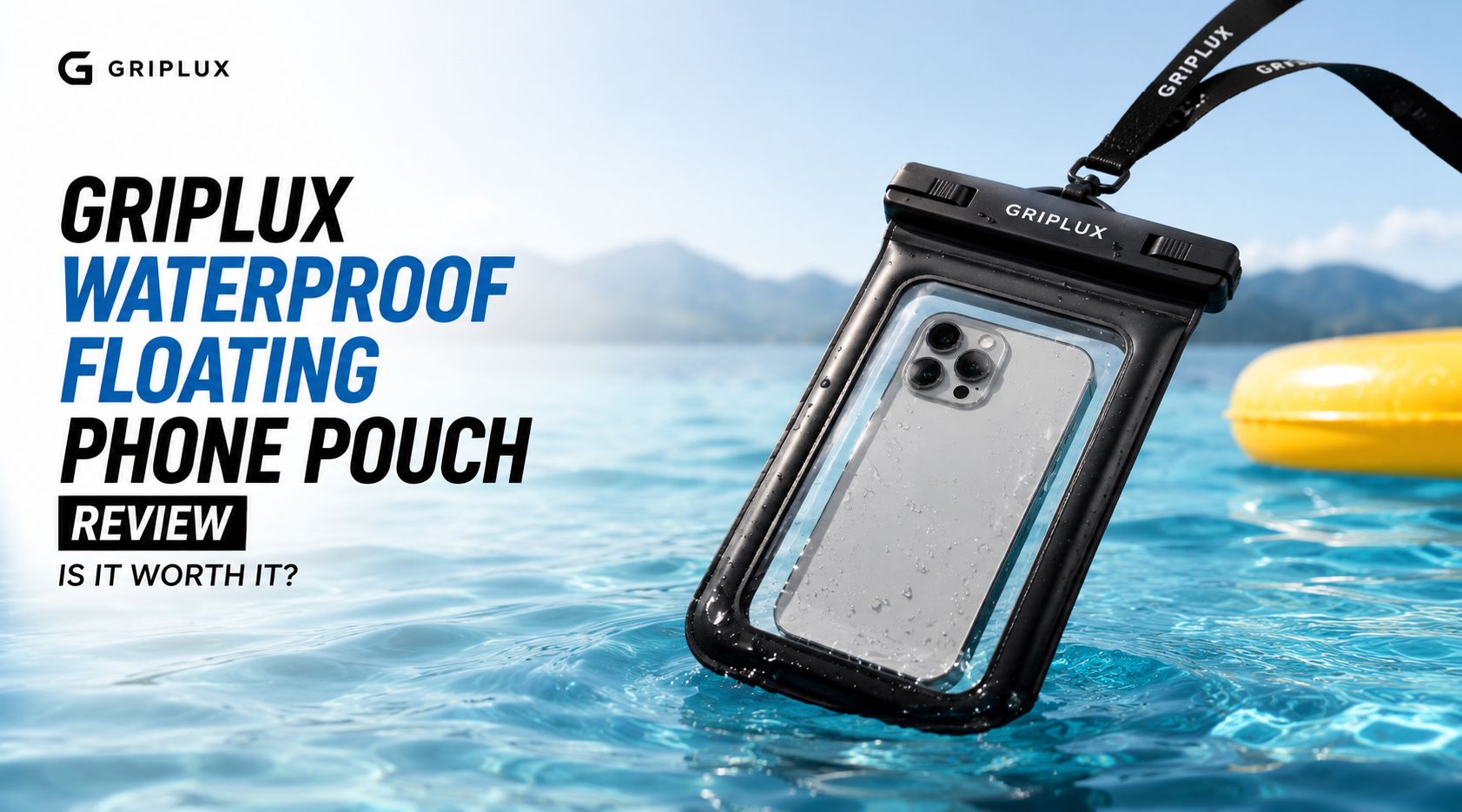
You are standing knee deep in the ocean, phone in hand because you want the photo, and one wave is all it takes to turn a good afternoon into an expensive mistake. A floating phone pouch exists for exactly that moment, and it does more than most people realize once they actually own one.
Quick answer: A floating phone pouch is a sealed, waterproof case that keeps your phone dry and lets it float if dropped in water. The best uses are anywhere water and your phone naturally end up in the same place: the beach, the pool, boats, kayaks, and rainy hikes. The Griplux Waterproof Floating Phone Pouch is built to handle all of these without you needing to leave your phone behind.
Why Floating Matters as Much as Waterproof
Waterproof and floating are two different things, and it is worth understanding why. A pouch can be fully sealed and still sink straight to the bottom of a pool or lake if you drop it, since phones themselves are dense enough to sink on their own. A floating design adds buoyancy to the pouch itself, so if it slips out of your hand, it stays on the surface instead of disappearing.
The Griplux Waterproof Floating Phone Pouch is built with this in mind. At just 0.2 lbs and sized to fit devices up to 6.8 inches, it is light enough that the pouch's own buoyancy keeps a phone floating rather than sinking, which is the entire point of choosing a floating design over a plain waterproof case.
The Best Uses, One by One
Beach Days
Sand is just as much of a threat to your phone as water is, working its way into ports and speakers in ways that are hard to fully clean out. A sealed pouch keeps sand and water out at the same time, and you can still use the touchscreen through the clear front to take photos without ever opening it.
Pool Days
Pool chemicals, splashes, and the occasional accidental drop into the water all make a floating pouch worth having poolside. Since it floats, a phone that slips off a lounge chair edge and into the water is easy to retrieve instead of becoming a scramble to the bottom of the deep end.
Boating and Kayaking
This is where the floating feature earns its keep the most. A phone that goes overboard from a boat or kayak without a floating pouch is often gone for good. With one, it stays on the surface long enough to grab, even if it ends up in open water rather than a pool.
Snorkeling and Swimming
A sealed, floating pouch makes it possible to keep a phone accessible for photos during snorkeling or swimming without needing to leave it on shore with your other belongings.
Rainy Hikes and Camping
Water resistance is not just about swimming. A sudden downpour on a hike or a wet tent floor while camping can do just as much damage as a pool. The same seal that protects against submersion also handles rain, humidity, and general outdoor moisture exposure.
A Real Scenario Worth Planning For
Picture a boat trip where your phone doubles as your camera, your map, and your only way to call for help if something goes wrong. Without a floating pouch, keeping it out reliably means constant anxiety about a wave or a wet hand. With one, the phone stays accessible the entire trip. If it does end up in the water, which happens more often than anyone plans for, it floats within reach instead of sinking with the rest of your gear.
That is the actual value of a floating pouch. It is not just about preventing water damage, it is about removing the reason to leave your phone behind in situations where you would actually want it.
Getting the Most Out of Your Pouch
A few habits make a real difference in how well a floating pouch performs over time. Always check the seal before each use, running a finger along the closure to confirm it is fully locked, since a partially closed seal is the most common cause of water getting in. Before trusting it in real water, many people do a quick test first: seal the pouch with a tissue or paper towel inside, submerge it briefly in a sink, and check whether the paper stayed dry. It takes thirty seconds and confirms the seal is working before you actually need it to.
It also helps to rinse the pouch with fresh water after use in a pool or ocean, since chlorine and salt residue can build up on the seal over time and affect how well it closes on future use. Letting it air dry fully before storing it away, rather than sealing it up wet, keeps the material in better shape long term.
Matching the Pouch to the Activity
-
Beach and pool: any sealed, floating pouch works well here since the main risks are splashes, sand, and short drops into shallow water.
-
Boating and kayaking: floating capability matters most here, since the water is often deeper and retrieval is harder.
-
Snorkeling: prioritize a pouch with a clear window over both the screen and camera, so you are not fumbling to line up a shot.
-
Hiking and camping: the seal matters more than the float here, since you are protecting against rain and moisture rather than deep water.
What to Check Before You Buy Any Floating Pouch
-
Check the size fit against your specific phone, especially if you use a thick case, since some pouches are sized tightly.
-
Look for a touchscreen-friendly window so you are not sealing your phone away and losing all functionality.
-
Confirm floating capability specifically, since not every waterproof pouch is designed to float. Some are waterproof but will sink if dropped.
-
Think about your actual activity first, then match the pouch's features to it, rather than buying based on price alone.
Frequently Asked Questions
Can I use my phone's touchscreen while it is inside the pouch?
Yes. A properly designed pouch, including the Griplux Waterproof Floating Phone Pouch, uses a clear front window that allows normal touchscreen use for photos, texting, and navigation without opening the seal.
Will a floating phone pouch protect my phone if I drop it on concrete?
No. Floating pouches are built for water protection, not impact protection. If drop protection matters as much as water protection, pairing the pouch with a reinforced case, like a Kevlar case, covers both situations.
Do I need to remove my phone case before using the pouch?
It depends on the case thickness and the pouch's interior dimensions. Slimmer cases typically fit fine, while bulkier cases may need to be removed first to get a proper seal.
Can I take photos through the pouch underwater?
Yes, as long as the pouch has a clear window aligned with your phone's camera. Image quality may be slightly reduced by the plastic layer, but the camera remains fully usable.
Is a floating pouch better than a waterproof case for water activities?
It depends on the activity. A pouch is more versatile across activities like boating and hiking since it is quick to seal and unseal, while a dedicated waterproof case is better suited to prolonged, repeated water exposure like diving.
How do I know if the seal is still working after months of use?
Run the paper towel test periodically: seal a piece of paper towel inside, submerge the pouch briefly, and check for any moisture. Repeated use, sun exposure, and sand can wear down a seal over time, so it is worth checking every so often rather than assuming it still performs like new.
The Bottom Line
A floating phone pouch is one of those accessories that seems niche until the first time you actually need it. Between beach trips, pool days, boating, and even unexpected rain, water and phones end up in the same place more often than people plan for. A floating design covers the situations a regular case cannot, without asking you to leave your phone behind.
Whether you're heading to the beach, spending the day by the pool, or planning a kayaking trip, the Griplux Waterproof Floating Phone Pouch helps keep your phone protected without taking it out of reach. Explore it before your next adventure and enjoy the water with greater peace of mind.
Note: Product specifications are based on information available on Griplux.com at the time of writing. Always test the pouch's seal before using it with your phone in or around water, and follow the manufacturer's instructions for proper use.
Aktie:
How Fast Is MagSafe Charging?
Griplux Waterproof Floating Phone Pouch Review