

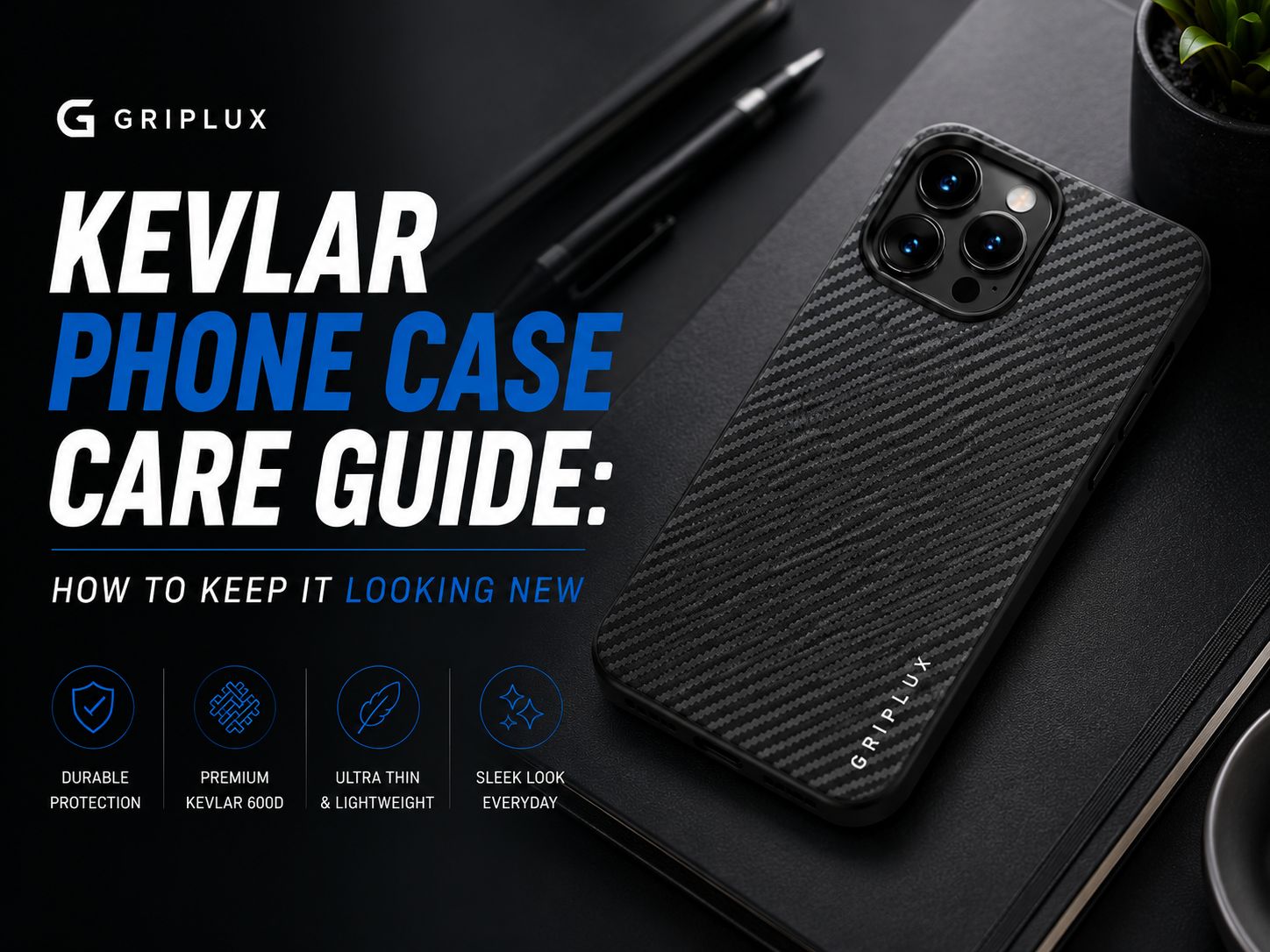
A Kevlar case earns its price by being genuinely tough - 600D aramid fiber, drop protection rated to 5 feet, a coating built to resist water, oil, and fingerprints. But "durable" doesn't mean "maintenance-free." Like any material that sees daily use in pockets, bags, and hands, a Kevlar case picks up dust, oils, and the occasional scuff over time. The good news is that keeping it looking new takes a few minutes, not a special product or a trip to a repair shop.
Here's a simple, safe care routine for the Griplux Thin Kevlar 600D Case - and a few things worth avoiding along the way.
Why Kevlar Cases Need a Different Approach Than Silicone
Standard silicone cases are forgiving - you can scrub them with almost anything and they'll bounce back. Aramid fiber is different. The weave that gives Kevlar its strength can also trap dust and oils between fibers if it isn't cleaned regularly, and harsh chemicals can degrade the water- and fingerprint-resistant coating over time rather than just wiping it away. None of that means the case is fragile - it just means the right cleaning approach matters more than it does for a basic rubber case.
What You'll Need
Nothing specialized. A proper Kevlar case cleaning only takes:
-
Warm water
-
A small amount of mild soap (dish soap works fine)
-
A soft cloth or microfiber towel
-
A soft-bristled brush (an old toothbrush is perfect)
Step-by-Step: Cleaning Your Kevlar Case
1. Remove your phone from the case first. This sounds obvious, but it's the step people skip most often. Cleaning with the phone still inside risks water getting near the ports or buttons, and it makes it harder to actually clean the interior of the case.
2. Rinse away loose dust and debris. Hold the case under warm running water for a few seconds to knock loose any surface dust or grit before you start scrubbing. This step alone prevents you from grinding debris into the fiber weave later.
3. Mix a mild soap solution. A small amount of dish soap in warm water is enough — you don't need a strong concentration. Dip the soft brush into the solution.
4. Gently scrub in small circular motions. Focus on any visibly dirty areas, the edges around the camera cutout, and the port openings where lint and dust tend to build up. Light pressure is all that's needed — the goal is to lift dirt out of the weave, not scrub the coating off.
5. Rinse thoroughly. Run the case under clean water again to remove all soap residue. Leftover soap can leave a filmy residue on the coating if it isn't fully rinsed.
6. Air dry completely before reattaching your phone. Pat the case dry with a soft cloth, then let it air dry the rest of the way. Avoid using a hair dryer or any direct heat source — heat can affect the adhesive around the MagSafe magnet ring over time.
What to Avoid
A few things are worth steering clear of entirely:
-
Bleach or harsh disinfectant sprays — these can break down the coating that resists water, oil, and fingerprints
-
Alcohol-based cleaners — commonly used on phone screens, but too harsh for the case's protective coating with regular use
-
Abrasive scrubbers or scouring pads — anything rougher than a soft brush risks fraying the aramid fiber weave
-
Machine washing — the case isn't fabric in the laundry sense, and washing machines can damage both the fiber structure and the MagSafe magnet
-
Direct, prolonged heat — leaving the case on a dashboard in direct sun or near a heater can affect the magnet strength over time
Keeping the MagSafe Magnets Working Properly
The Kevlar case's built-in magnet ring is what keeps MagSafe chargers, wallets, and grips snapping on securely. Metal shavings, coins, and keys carried in the same pocket can sometimes stick to the case if the magnet is exposed to loose metal debris — wiping the case down periodically also helps you catch and remove anything that's accumulated there before it affects how well accessories attach.
How Often Should You Clean It?
There's no strict schedule, but a good rule of thumb is to give the case a quick clean whenever you notice visible dust buildup, a change in texture, or reduced grip — typically once every few weeks for daily use, more often if you work outdoors or in a dusty environment.
Frequently Asked Questions
Can I clean a Kevlar phone case with alcohol wipes?
It's best to avoid alcohol-based cleaners on the case body, since repeated use can wear down the water- and fingerprint-resistant coating. Mild soap and water is the safer choice.
Will cleaning affect the case's drop protection?
No. Proper cleaning with mild soap and water doesn't affect the aramid fiber's structural strength. Just avoid abrasive scrubbing or harsh chemicals, which can wear down the fiber over time.
How do I remove scratches from a Kevlar case?
Light surface marks often reduce in appearance with a gentle clean, but deeper scratches into the fiber weave aren't reversible with cleaning. This is generally a cosmetic issue rather than one that affects protection.
Can I put a Kevlar case in the washing machine?
No. Machine washing can damage the fiber structure and affect the built-in MagSafe magnet. Hand cleaning with mild soap and water is the recommended method.
Does the coating wear off over time no matter what I do?
Gentle, regular cleaning actually helps the coating last longer by preventing dirt and oils from building up and breaking it down faster. Harsh chemicals and abrasive cleaning are what typically cause coatings to wear prematurely.
Looking for more ways to protect your phone day to day? Browse the full Griplux case lineup or check out the Thin Kevlar 600D Case directly.
Aktie:
Griplux Heat Dissipation Case: Does It Stop Overheating?
Best Magnetic Phone Grips in 2026: Features, Pros & Top Picks