

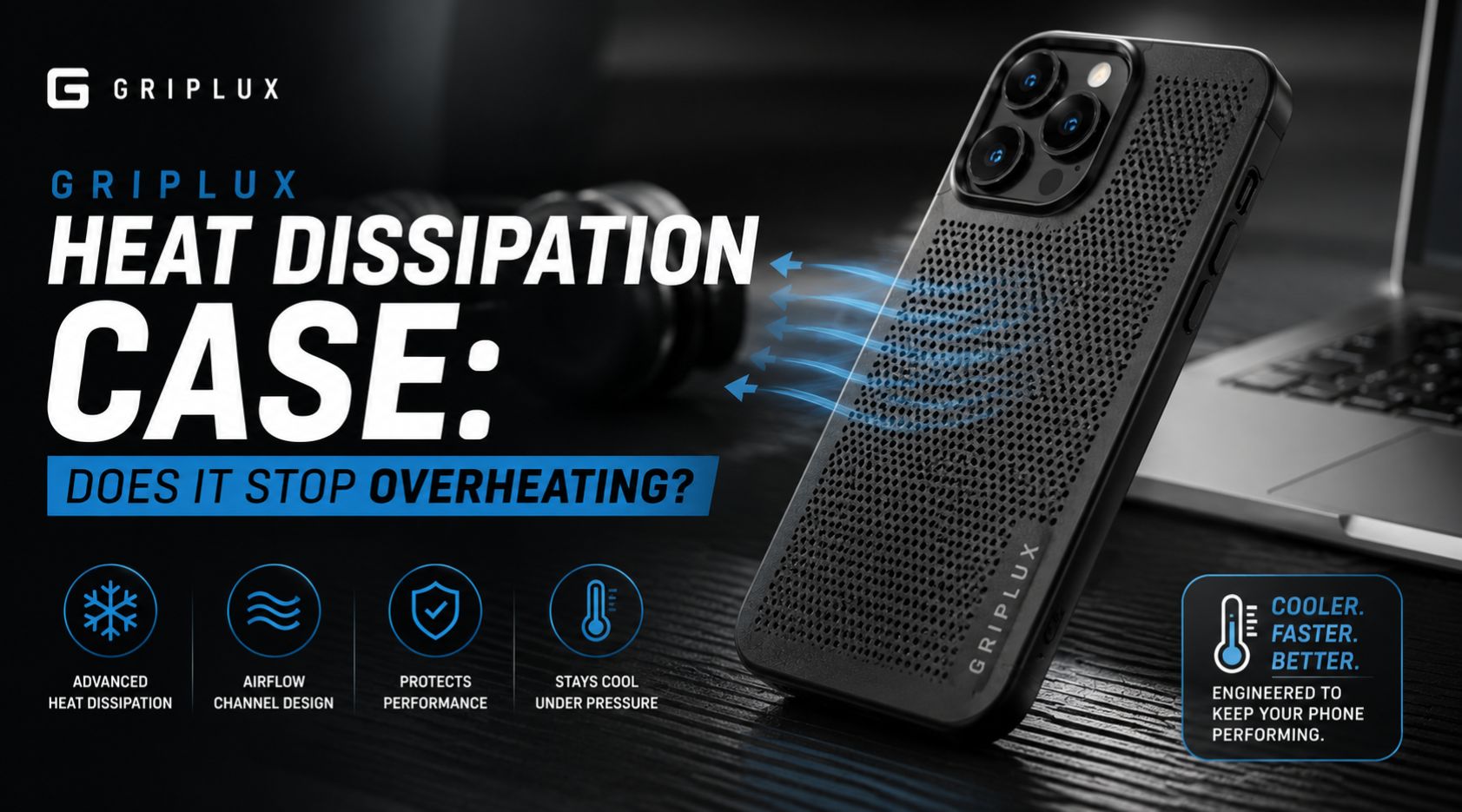
If you've ever had your phone slow down mid-game, watched a GPS app throw up a temperature warning on a long drive, or felt your phone go uncomfortably warm during a video call, you've run into the same problem a lot of case makers are finally starting to take seriously: heat. Standard silicone and rubber cases are good at absorbing shock, but they're also good at trapping heat against the back of your phone - which is exactly the opposite of what you want when your processor is already working hard.
That's the idea behind Griplux's Thin Heat Dissipation case, and it's worth a real look at whether the design actually delivers, not just what the name implies.
Why Phone Heat Is Getting More Attention
Phones are doing more demanding work than they used to - longer gaming sessions, continuous GPS navigation, video calls that run for hours, and wireless charging that generates its own heat on top of everything else. When a phone gets too warm, most modern devices respond by throttling performance to protect the battery and internals, which is the "why did my phone suddenly get slow" moment a lot of people run into without realizing heat is the cause.
A regular case doesn't cause overheating on its own, but a solid, non-breathable case can absolutely make an existing heat problem worse by trapping warmth against the back of the phone instead of letting it escape. That's the specific problem a heat dissipation case is designed to solve.
How the Griplux Heat Dissipation Case Actually Works
The design centers on over 1,000 micro-holes engineered into the case body. Instead of sealing your phone's back panel against a solid layer of silicone, the perforated structure allows heat to actively escape rather than build up underneath the case. Combined with the case's slim 0.6mm profile, there's less material overall for heat to get trapped behind in the first place.
-
1,000+ micro-hole ventilation design for active heat dissipation
-
0.6mm ultra-thin profile - minimal material means less heat retention
-
Precision cutouts for ports, buttons, and camera access
-
Full MagSafe compatibility
-
No visible branding - clean, logo-free finish
-
Available in Solid Black, Frosted Black, White, and Deep Purple
-
$29.00–$29.99 depending on color
What Customers Are Actually Reporting
Customer feedback on the Solid Black and Frosted Black colorways points to a consistent pattern: people switching from a standard case specifically because of overheating during GPS use, video calls, or extended app use, and noticing a real difference in how warm the phone feels during the same activities afterward. A few reviewers also note the case stays thin enough that it doesn't feel like a "cooling gadget" bolted onto the phone - it still functions as a normal, everyday case.
That said, it's worth setting expectations accurately: a case with ventilation holes can meaningfully improve airflow and reduce how much heat gets trapped against your phone, but it isn't a substitute for closing background apps or lowering screen brightness during genuinely heavy use. Think of it as removing one contributing factor to overheating, not eliminating heat production altogether.
Who This Case Actually Makes Sense For
-
Mobile gamers who notice their phone getting warm (and performance dropping) during longer sessions
-
Drivers who rely on GPS for extended periods, especially with the phone mounted and the screen on continuously
-
Anyone who wireless charges regularly, since wireless charging generates extra heat on its own
-
People who've noticed their phone throttling or slowing down during normal daily use and suspect heat is the cause
Who Might Not Need It
If your phone use is mostly texting, browsing, and short calls, a standard case is unlikely to cause any noticeable heat issues, and the Ultra Thin or MagSafe Rubberized lines will serve you just as well. Heat dissipation earns its place specifically for sustained, demanding use - it's a targeted fix, not a universal upgrade.
Why Heat Matters Beyond Just Comfort
A warm phone in your hand is annoying, but the bigger issue is what sustained heat does over time. Lithium-ion batteries - the kind in every modern phone - degrade faster when they're regularly exposed to high temperatures, meaning a phone that consistently runs hot may hold less charge after a year or two compared to one that stays cooler. Heat is also the main trigger for thermal throttling, where the phone deliberately slows itself down to protect its components, which is why games or apps can start stuttering the longer a session runs.
None of that means a case alone determines your phone's long-term battery health - usage habits, charging patterns, and the phone's own hardware all play a role too. But removing an unnecessary heat-trapping layer is one of the simpler things within your control, especially if you're already noticing your phone running warm on a regular basis.
Heat Dissipation vs. Griplux's Other Case Lines
|
Feature |
Heat Dissipation |
Ultra Thin |
Kevlar 600D |
|---|---|---|---|
|
Best for |
Gaming, GPS, heavy use |
Everyday minimal look |
Drop protection |
|
Thickness |
0.6mm |
3.5mm |
Slim, reinforced |
|
Ventilation |
1,000+ micro-holes |
None |
None |
|
MagSafe |
Yes |
Yes |
Yes |
|
Price |
$29-$29.99 |
$29.99 |
$49.00 |
Frequently Asked Questions
Can a phone case actually cause overheating?
A case doesn't generate heat itself, but a solid, non-ventilated case can trap heat that your phone is already producing, making an existing heat issue worse. A ventilated design allows that heat to escape instead of building up.
Will a heat dissipation case fix a phone that's already overheating badly?
It can help by removing a contributing factor, but severe overheating is often caused by background apps, battery health, or extended high-performance use, which a case alone can't fully resolve. Closing unused apps and lowering screen brightness during heavy use still helps.
Does the micro-hole design let in dust or debris?
The holes are small and positioned for airflow rather than open access, so debris exposure is minimal for normal daily use, similar to the mesh venting used in laptop cooling designs.
Is a heat dissipation case only useful for gamers?
No. GPS navigation, video calls, and wireless charging all generate meaningful heat too, so the benefit extends to anyone doing sustained, screen-on activities, not just gaming.
Does this case still support MagSafe accessories?
Yes, the Heat Dissipation case is fully MagSafe compatible, so chargers, wallets, and grips attach normally.
What else can I do to keep my phone from overheating?
Alongside a ventilated case, closing background apps, lowering screen brightness, avoiding direct sunlight during extended outdoor use, and removing the case entirely during wireless charging (if it feels warm) all help reduce heat buildup.
If your phone regularly gets warm during gaming, GPS navigation, or long video calls, the Griplux Thin Heat Dissipation Case offers a simple way to improve airflow while maintaining a slim, everyday design.
Aktie:
Best MagSafe Accessories for iPhone in 2026: The Ultimate Buyer's Guide
Kevlar Phone Case Care Guide: How to Keep It Looking New