

On this page
01The trade in one sentence
A MagSafe-style battery pack trades efficiency for convenience: it sticks to the back of your phone and charges with no cable, but loses noticeably more energy as heat than a regular power bank plugged in with a USB-C cable.
That's the whole MagSafe battery pack vs power bank debate in miniature. The rest is working out which side of the trade you sit on. If you mostly charge in a bag or on a table, the cable bank wins easily. If you're on your phone walking around a theme park, navigating or shooting video, the magnetic pack's lack of a cable is worth the lost percentage.
02MagSafe battery pack vs power bank, side by side
| Magnetic battery pack | Regular power bank (cable) | |
|---|---|---|
| How it connects | Snaps onto the phone's back | USB-C or Lightning cable |
| Share of capacity reaching the phone | A little under half | About two-thirds |
| Charging speed | Up to 15W on Qi2 packs; up to 25W on Qi2 25W packs with recent iPhones; slower on non-certified packs | Up to 20W+ with USB-C PD, often more on Android |
| Typical capacity | 5,000 to 10,000 mAh | 10,000 to 20,000 mAh |
| Heat on the phone | Noticeable while attached | Mild |
| Use phone while charging | Easy | Cable gets in the way |
| Works with | Magnetic iPhones, Qi2 phones, or a magnetic case | Any phone with a matching cable |
| Charge a tablet, earbuds or a friend | Sometimes, via USB-C | Yes |
The efficiency gap is the number to remember. A 10,000 mAh magnetic pack gives you about the same wireless charge as a 7,000 mAh bank used with a cable. The charge calculator has a cable/wireless switch if you want it for your phone.
03Which one suits you
Magnetic pack
- No cable to snag or forget
- Slim 5,000 to 10,000 mAh sizes fit a pocket
- Works as a grip on some models
- Lower efficiency, more heat
Regular power bank
- Most charges per dollar and per gram
- Fast wired charging with USB-C PD
- Charges any phone, tablet or earbuds
- Needs a cable, and your hand is tethered
We'd steer most people to a 10,000 mAh cable bank as the everyday backup. It's cheaper, cooler and refills nearly any current phone at least once. Add a magnetic pack if you live on your phone outdoors, or pick a magnetic pack with a USB-C port and use whichever suits the moment.
The magnetic pack makes sense if
- You navigate on foot or by bike and need the phone in your hand while it charges
- You shoot a lot of photos or video at events and a dangling cable gets in the shot
- You want a top-up of 30 to 50 percent, not a full refill
- Your phone already lives in a MagSafe-compatible case
The cable bank makes sense if
- You charge in a bag, at a desk or on a nightstand
- You need more than one full charge between outlets
- You also charge earbuds, a tablet or someone else's phone
- You want the fastest top-up before you head out
04The heat question
Wireless charging turns part of the energy into heat, and with a magnetic pack that heat sits directly against your phone's battery. Add a warm day, a game or a video call, and the phone may slow its charging to protect itself. iPhones can pause charging past 80% when they're too warm, which can look like the pack has stopped working. We dig into the long-term effect in does MagSafe charging damage battery health.
- Take thick cases off, or use a thin MagSafe-compatible case, so the pack sits close to the coil.
- Avoid heavy use while it's attached on hot days; streaming plus wireless charging adds up quickly.
- Switch to the cable when you need a big top-up rather than a trickle.
05Will a magnetic pack work with your phone?
- iPhone 12 and later have magnets built in, except the iPhone 16e. See which iPhones have MagSafe.
- Pixel 10 series (except the 10a) have Qi2 magnets that Google calls Pixelsnap.
- Galaxy phones charge wirelessly but need a magnetic case for a pack to hold on. See does Samsung have MagSafe.
- Older or non-wireless phones can't use one at all; stick with a cable bank.
iPhone 8 through iPhone 11 charge wirelessly but have no magnets inside. A magnetic case gives a pack something to grip, though you'll get basic Qi speeds at best. For those phones, and for any phone with a tired battery, a cable bank is usually the smarter spend; check your battery health first.
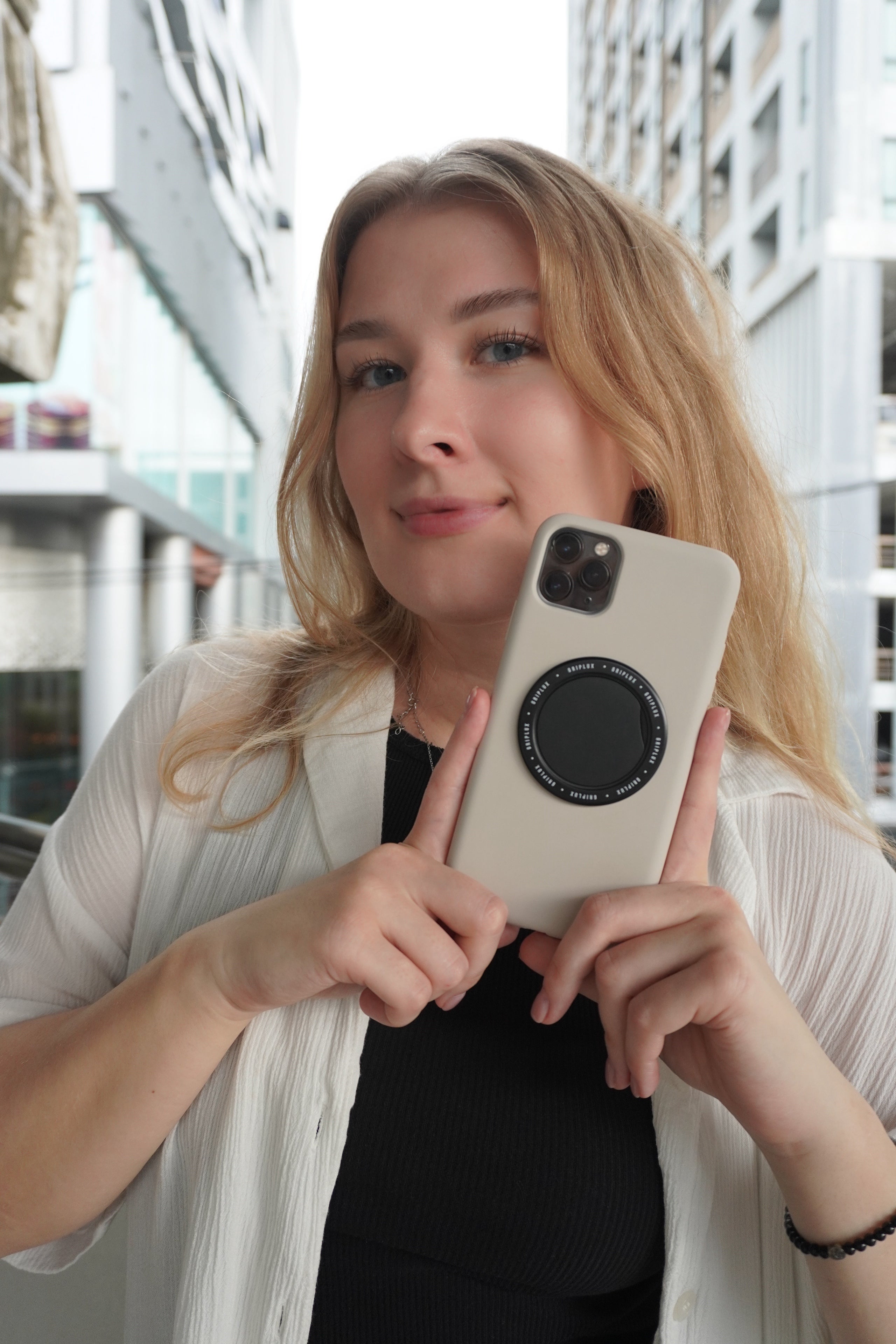
Snap-on packs for MagSafe-compatible iPhones and magnetic cases, plus a cable bank for big days.


Questions people ask
Is a MagSafe battery pack worth it?
If you use your phone while it charges, yes. Otherwise a regular power bank gives you more charge for less money and less heat. Many people carry a small magnetic pack day to day and a larger cable bank for travel.
Do magnetic power banks damage your battery?
They don't damage it directly, but they add heat, and sustained heat speeds up battery aging. Keep sessions short on hot days, avoid gaming while attached, and use the cable for big top-ups.
Why is my MagSafe battery pack charging so slowly?
Wireless is slower than a cable, and non-certified magnetic packs often charge at basic Qi speeds. Heat also makes the phone throttle charging. A thick case or poor alignment slows it further.
Can I use a MagSafe-compatible power bank with Android?
Yes, if the phone supports wireless charging. Pixel 10 models (except the 10a) have magnets built in; most Galaxy phones need a magnetic case for the pack to stay put.
How many charges do I get from a 5,000 mAh magnetic pack?
Roughly half to two-thirds of a full charge for most phones wirelessly, since a little under half of the capacity reaches the phone. A small iPhone gets closer to a full charge over the pack's cable.