

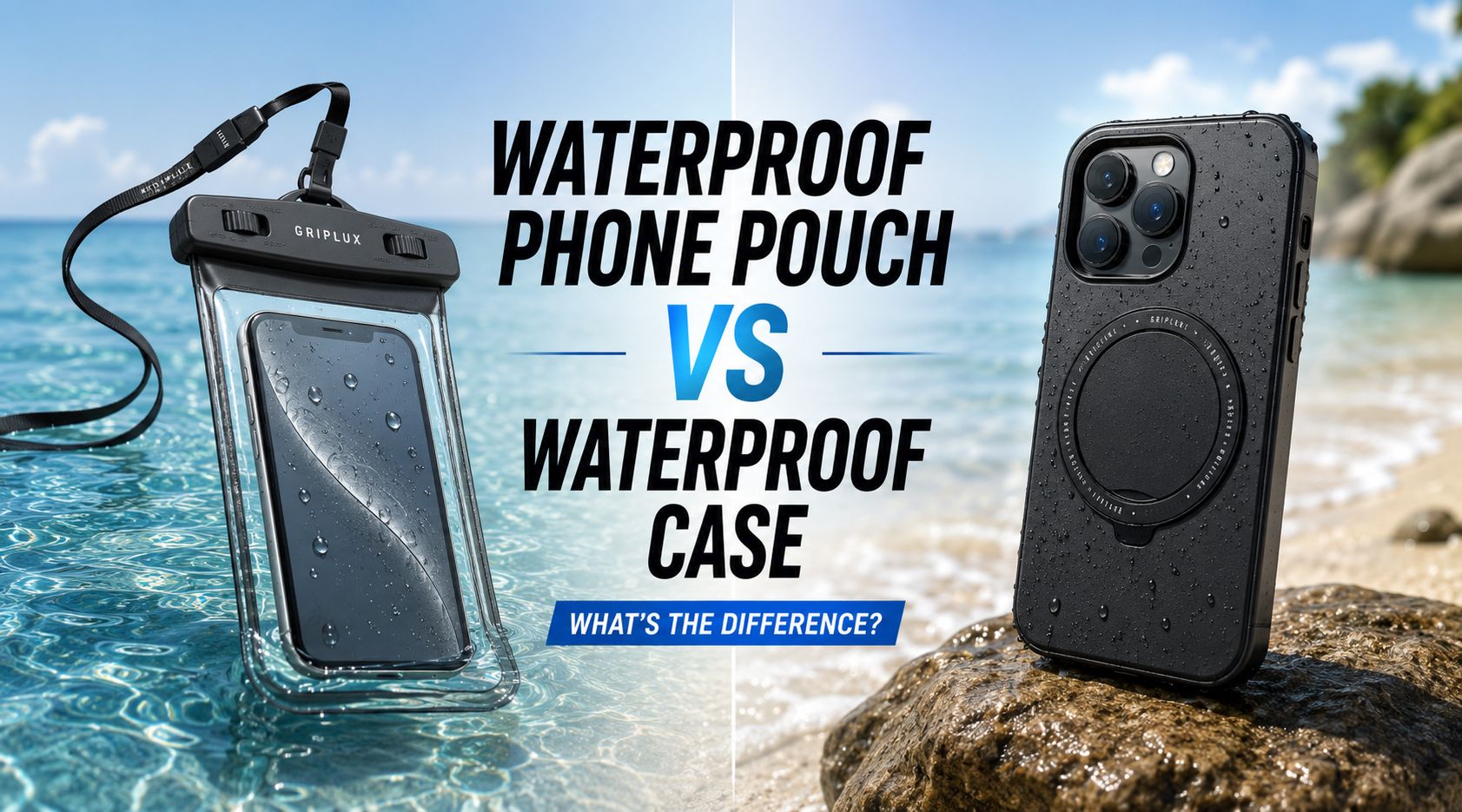
You are packing for a trip near the water and you see two very different products both labeled waterproof: a flexible pouch and a rigid case. They sound like they solve the same problem, so it is easy to assume either one works. They actually protect your phone in different ways, and picking the wrong one for your situation means paying for protection you do not need, or missing protection you do.
Quick answer: A waterproof phone pouch vs a waterproof case comes down to flexibility versus permanence. A pouch is a sealed, removable sleeve you slide your phone into for a specific activity, while a waterproof case stays on your phone full time and often adds impact protection alongside water resistance. Pouches are better for occasional water exposure, cases are better for constant or extreme conditions.
What a Waterproof Pouch Actually Is
A waterproof pouch, like the Griplux Waterproof Floating Phone Pouch, is a flexible, sealed enclosure you place your phone into before an activity and remove it from afterward. It is not something you leave your phone in all day. The material is usually a flexible plastic like TPU, sealed along the edges, with a clear window that keeps the touchscreen usable while sealed.
The Griplux version adds a floating design on top of the waterproof seal, meaning it stays on the surface if it slips into water rather than sinking, which a lot of pouches and cases do not account for.
What a Waterproof Case Actually Is
A waterproof case is built into your phone's everyday protection. It is rigid, stays on the phone permanently the way a normal case would, and is designed to handle both water exposure and physical impact at the same time. Because it needs to seal every port, button, and camera opening while still being usable day to day, it tends to be bulkier and more expensive than a pouch.
Waterproof Pouch vs Waterproof Case: Side by Side
|
Factor |
Waterproof Pouch |
Waterproof Case |
|---|---|---|
|
Worn full time |
No, activity specific |
Yes, everyday use |
|
Impact protection |
Minimal |
Usually built in |
|
Bulk |
Very low |
Higher |
|
Floating capability |
Available on some models |
Rare |
|
Touchscreen access |
Yes, through a clear window |
Yes, direct access |
|
Typical cost |
Lower |
Higher |
|
Best for |
Occasional water exposure |
Frequent or extreme water use |
A Real Example of Choosing Between Them
Say you are heading to the beach for a weekend. You do not need your phone sealed in water gear all day, just during the parts where sand, splashes, or a swim are involved. A pouch works perfectly here: slide the phone in before you get in the water, take it out once you are back on dry sand.
Now say you work outdoors in wet conditions every day, rain or shine, and your phone needs to survive that exposure constantly without you thinking about it. A waterproof case makes more sense in that scenario, since it stays on the phone permanently and does not require you to remember to seal anything before each use.
When a Pouch Makes More Sense
-
You only need water protection occasionally, not constantly
-
You want the option to remove it completely when you do not need it
-
You care about minimal bulk during normal daily use
-
You want floating protection specifically, which most rigid cases do not offer
When a Case Makes More Sense
-
You need water resistance as part of your everyday carry, not just for specific trips
-
You also want impact protection built into the same product
-
You would rather not deal with sealing and unsealing an enclosure before each use
-
Your work or lifestyle involves consistent exposure to rain, splashes, or moisture
Can You Use Both?
Yes, and for a lot of people this is actually the better setup. An everyday case, like Griplux's Ultra Thin or Kevlar line, handles daily drops and scuffs, while a waterproof pouch comes out specifically for the beach, pool, or boat trip. Neither product is trying to do the other's job, so pairing them covers more ground than expecting one product to handle both.
Frequently Asked Questions
Is a waterproof pouch as protective as a waterproof case?
Not for impact protection. A pouch focuses almost entirely on water resistance, while a waterproof case typically combines water resistance with drop protection since it is built to be worn full time.
Can I use a waterproof pouch every day instead of a case?
It is possible but not practical. Pouches are not designed for constant daily handling, texting, and general use the way a case is, and they add more friction to routine phone use.
Do waterproof cases float like some pouches do?
Most waterproof cases do not float, since they are built with denser, more rigid materials for impact protection. If floating matters to you specifically, a floating pouch is generally the better fit.
Which one is better for a beach vacation?
A pouch usually covers beach and pool needs well, since the exposure is occasional rather than constant. A case makes more sense if you are also worried about drops on hard surfaces throughout the trip, not just water.
Is it worth buying both a case and a pouch?
For most people, yes. An everyday case handles daily protection, and a pouch handles specific water activities, so together they cover more situations than either one alone.
The Bottom Line
The choice between a waterproof phone pouch and a waterproof case is not about which one is better overall, it is about matching the product to how often and how intensely you actually deal with water. Occasional exposure points toward a pouch. Constant exposure points toward a case. Many people end up needing both, and that is a reasonable outcome rather than a compromise.
Check out the Griplux Waterproof Floating Phone Pouch if your next trip involves any time near the water.
Aktie:
Solid Black Ultra Thin Case Review
Sierra Blue Ultra Thin Case Review