

On this page
01Every phone holder for running, compared
There's no single best phone holder for running. Phones have gotten big and heavy, and anything that weighs 200 grams or so will move when you do. The question is where that movement bothers you least.
Waist belt
- Weight sits near your center, so it bounces least
- Room for keys and a gel
- You have to pull the phone out to use it
Armband
- Screen is right there on your arm
- Big phones feel heavy and can swing
- Can chafe and trap sweat on long runs
In your hand, with a strap
- Nothing to buy beyond a strap or grip
- Uneven arm swing over long distances
- Strap stops sweaty drops
A few runners like a small crossbody bag worn high and tight across the chest. It's fine for walks and easy jogs but tends to bounce at faster paces, so cinch it as short as it goes.
GripLux doesn't sell running belts or armbands right now. If one of those is your pick, buy one sized for your phone with its case on. For short runs, the straps, grips and pouches below are what we'd use.
02Match the carry to the run
| Run | Best carry | Why |
|---|---|---|
| Easy 20 to 30 minutes | Hand with wrist strap or grip | Quick, nothing to strap on |
| Long run, 10K and up | Snug waist belt | Least bounce and chafe over an hour or more |
| Intervals or track | Belt, or leave the phone with your bag | Sprinting with a phone in hand throws off your form |
| Trail run | Belt or running vest pocket | Hands free for balance on rough ground |
| Rainy or very hot run | Waterproof pouch inside any of the above | Keeps sweat and rain off the ports |
It's worth asking whether you need the phone at all. If you track runs with a GPS watch that stores music, you can leave the phone at home on familiar routes and carry it only when you're running somewhere new, alone or after dark. Many runners split it that way: phone on long runs and unfamiliar trails, watch only for the daily loop. If you do bring the phone, start with it charged and close navigation apps you don't need, since GPS and a bright screen are what drain it.
03Bounce, sweat and rain
Bounce is the most common complaint, and it's almost always about fit. A belt worn on the hips rather than the waist, or an armband on the forearm rather than the upper arm, will flop. Wear belts snug at your natural waist with the phone at the small of your back or front center, and wear armbands high on the upper arm.
- Use the lightest case you're comfortable with. A rugged case can add noticeable weight. A slim case cuts bounce.
- Tighten until it doesn't shift when you jump on the spot. Then run a hundred meters and adjust again.
- Pack the phone so the screen faces your body. Fewer accidental taps and less sweat on the screen.
- Keep it out of your shorts pocket. Most pockets aren't built for a phone and the swing is worse than any holder.
Sweat is the sneaky one. Most recent phones are water resistant, but Apple notes that water resistance isn't permanent and can decrease with normal wear, and salty sweat sitting in the speaker grilles and charging port day after day doesn't help. A thin waterproof pouch inside your belt or armband keeps it off. Our blog covers the difference between a waterproof pouch and a waterproof case.
After a sweaty or rainy run, wipe the phone and let the port dry before you plug it in. If it shows a liquid warning, wait. See liquid detected in charging port.
04Straps, grips and pouches for short runs
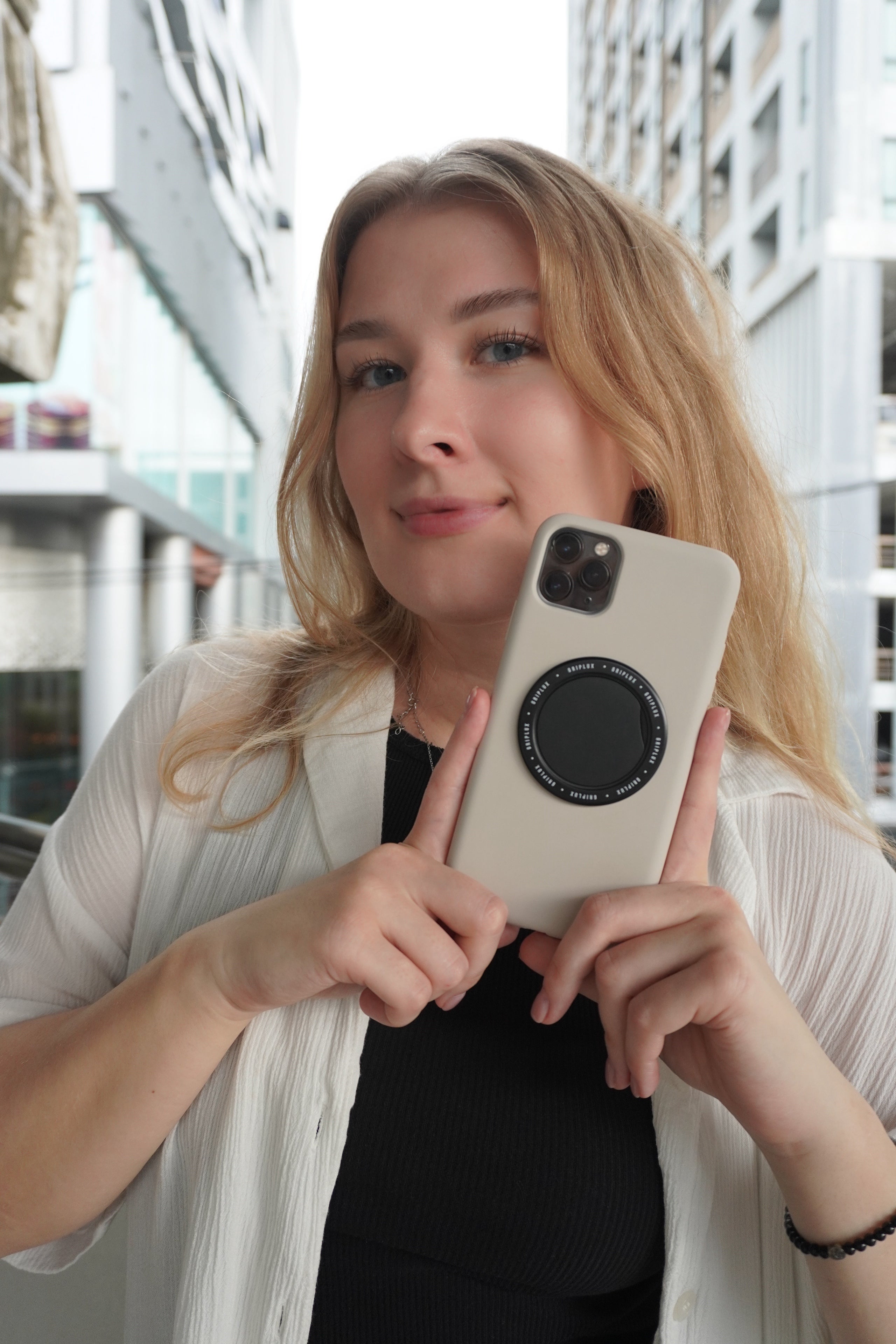
For runs where the phone stays in your hand, the goal is simple: don't drop it. A wrist strap anchors it, and a grip on the back gives your fingers something to hold when your palm gets damp. Grips also double as a stand for stretching videos afterward. Our phone grip guide compares the styles.
Straps and grips for in-hand runs, a pouch for wet days and a chest bag for walks and easy jogs.


05Pre-run phone checklist
Heading off-road for longer? Our hiking and camping phone kit covers battery, cold and water for days on the trail.
Questions people ask
What is the best way to carry a phone while running?
For runs over about 5K, a snug waist belt bounces least. For short runs, holding the phone with a wrist strap is fine. Armbands are best if you check the screen often, but heavy phones can swing.
Is it bad to run with a phone in your hand?
Not for short runs. Over longer distances, it can make your arm swing uneven and your hand tired. A wrist strap prevents sweaty drops; for long runs, a belt keeps your hands free.
Do armbands work with big phones?
They can, but bigger phones are heavier and tend to swing or slide on the arm. Buy an armband sized for your phone with its case on, and wear it high on the upper arm.
Can sweat damage my phone?
Water resistance helps, but it can decrease over time with normal wear. Salty sweat in the port and speakers isn't good for the phone. A thin waterproof pouch and drying the port before charging help.
How do I stop my running belt from bouncing?
Wear it at your natural waist, not on your hips, and tighten it until it doesn't move when you jump. A lighter case and centering the phone also reduce bounce.