

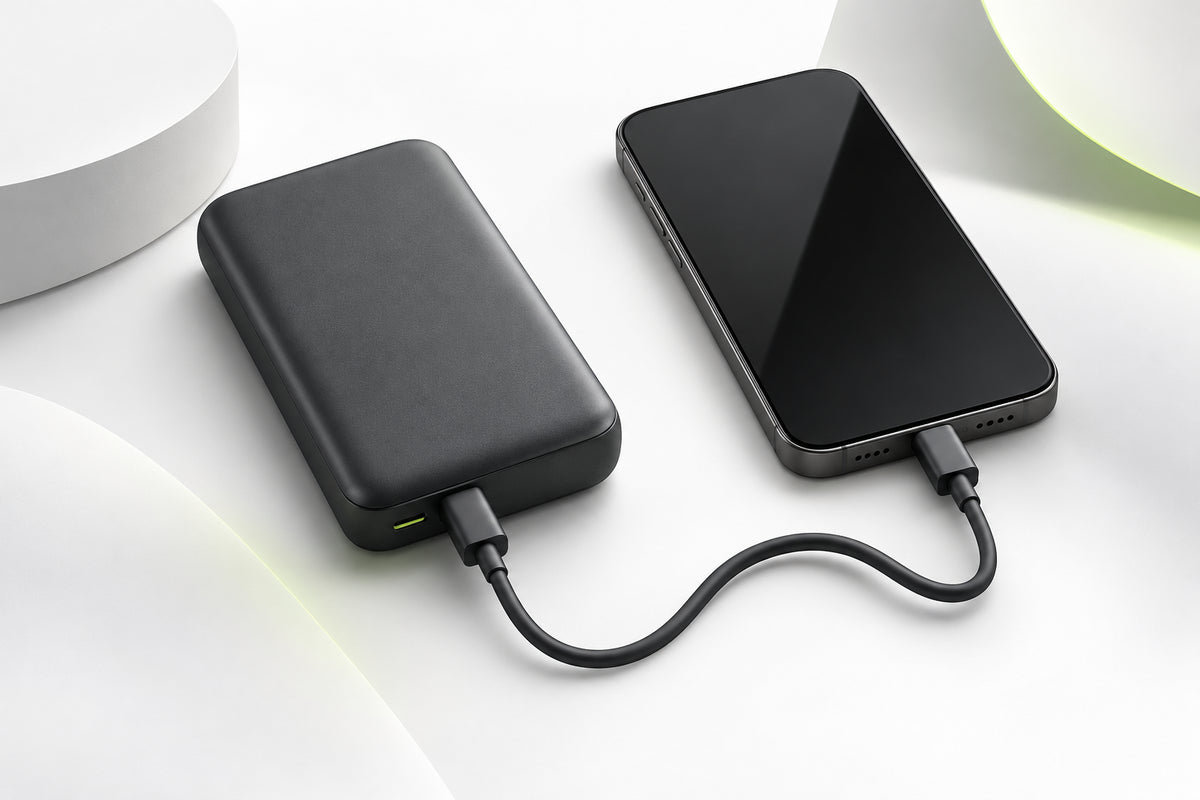
A power bank looks simple: a battery in a box. But two packs with the same number on the label can deliver very different results. One fully charges your phone three times and tops up fast. The other barely manages two slow charges and gets warm doing it. This guide explains what the specs mean so you buy the right one the first time.
Shop the GripLux power bank collection, or use our power bank charge calculator to estimate how many charges you will get.
Step 1: Understand mAh vs Wh
Most power banks advertise capacity in milliamp-hours (mAh). The catch is that mAh is measured at the battery cell's voltage, usually about 3.7 V, while your phone charges at 5 V or higher through USB. Energy is lost converting between them.
Watt-hours (Wh) is the more honest number because it measures energy, not charge at a particular voltage:
Wh = mAh × cell voltage ÷ 1000
A 10,000 mAh bank at 3.7 V holds about 37 Wh. Airlines also use Wh, not mAh, to set carry-on limits. See our page on power bank rules on planes before you fly.
Step 2: Expect about 60–70% real capacity
Conversion losses, heat and the phone's own charging circuitry mean you never get the full rated capacity into your phone. A good rule:
- Usable energy ≈ 60–70% of rated capacity.
- A 10,000 mAh bank typically delivers 6,000–7,000 mAh to a phone.
- Wireless and magnetic charging lose more than cabled charging.
So if your phone has a 4,000–5,000 mAh battery, a 10,000 mAh bank gives you roughly one and a half full charges by cable, not two and a half.
Step 3: Pick a capacity for how you use your phone
| Capacity | Typical use | Trade-off |
|---|---|---|
| 5,000 mAh | Top-ups, slim pocket carry, MagSafe snap-on | Roughly one partial to full charge |
| 10,000 mAh | Daily carry, commuting, a full day out | Best balance of size and capacity |
| 20,000 mAh | Travel, weekends, two devices | Heavier, bag rather than pocket |
| 25,000+ mAh | Laptops, tablets, multi-day trips | Bulky, check airline limits |
Most people are best served by a 10,000 mAh bank. Heavy users and travelers step up to 20,000.
Step 4: Check charging speed, not just capacity
A big bank that charges slowly is frustrating. Look at the output specs:
- USB-C Power Delivery (PD) is the standard for fast charging iPhones, Pixels and most laptops. Look for at least 20 W for phones.
- PPS matters for Samsung Super Fast Charging. Read what is PPS charging for details.
- Total output vs per-port output. A bank rated "65 W" may split that power when two devices are connected. Our guide to multi-port power sharing explains how.
- Input speed. A high-capacity bank with slow input can take all night to refill. USB-C PD input of 20 W or more makes recharging practical.
If you want a refresher on the terms, see USB PD vs Quick Charge and watts, volts and amps explained.
Step 5: MagSafe magnetic vs cabled power banks
Magnetic (MagSafe-style) packs snap onto the back of a compatible iPhone or a MagSafe case. No cable, easy to use while holding the phone.
- Pros: convenient, slim, no cable to forget.
- Cons: wireless charging is less efficient, so you get fewer charges per mAh, and the phone can run warmer.
Cabled packs connect by USB-C.
- Pros: faster, more efficient, can charge laptops, earbuds and other devices.
- Cons: you need a cable, and the phone is tethered while charging.
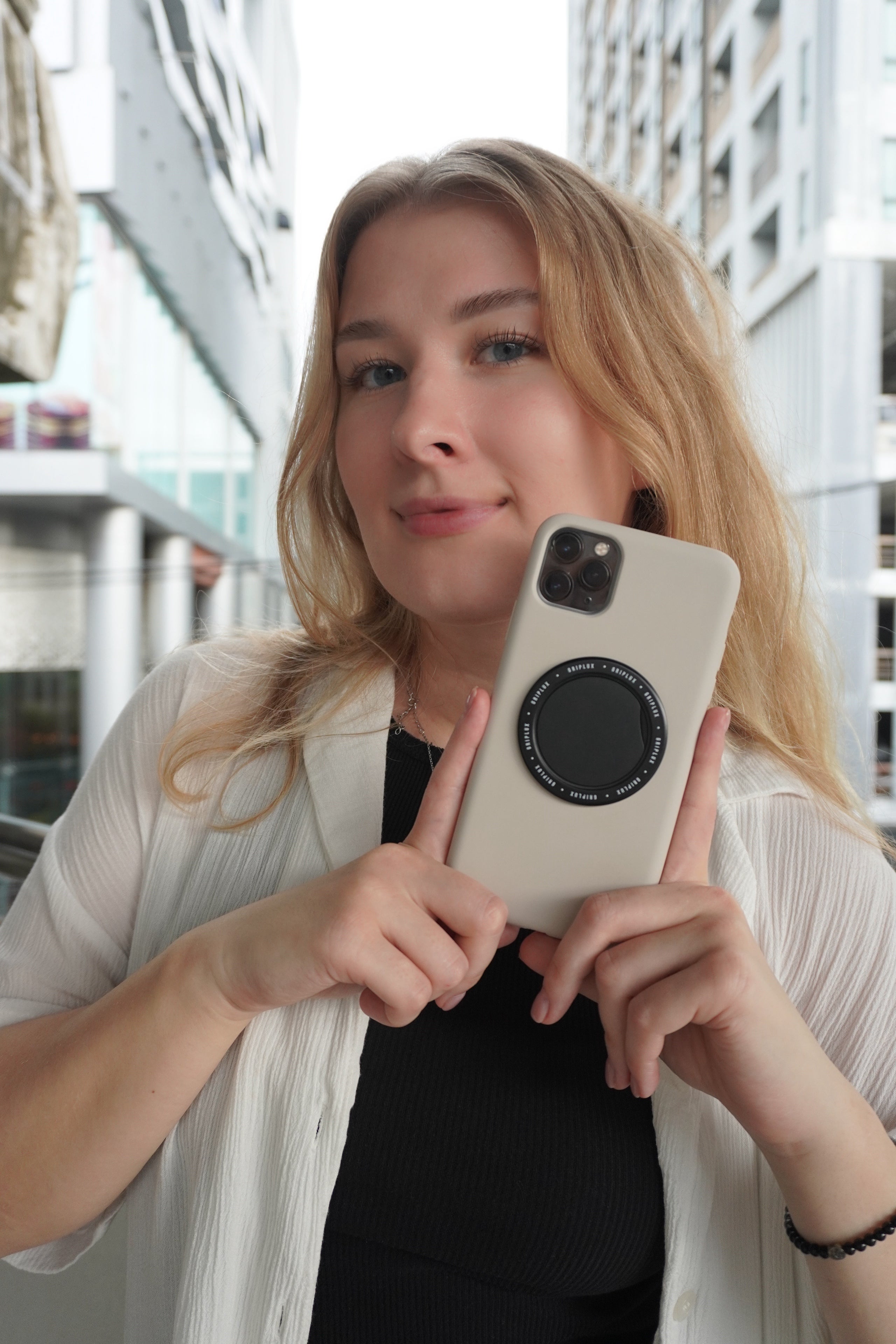
Many people carry a magnetic pack for daily top-ups and a larger cabled pack for travel. If you go magnetic, a strong magnetic case makes a big difference to hold. Browse our MagSafe cases for cases with strong magnet arrays.
Step 6: Size, weight and build
- Weight scales with capacity. Roughly, every 10,000 mAh adds a noticeable amount of weight in your pocket.
- Built-in cables and stands are convenient but add failure points.
- Displays that show remaining percentage are more useful than four dots.
- Pass-through charging lets you charge the bank and your phone together from one wall plug, handy in hotel rooms.
Step 7: Safety features to look for
A power bank stores a lot of energy close to your body. Choose one with:
- Protection against over-charge, over-discharge, short circuit and overheating.
- Certification marks from recognized testing bodies.
- A reputable seller and a real warranty.
Avoid packs with unrealistic capacity claims for their size and weight. Our guide on how to spot a fake charger covers the same warning signs.
Retire any power bank that swells, gets very hot, smells odd or has a damaged case.
Caring for your power bank
- Store it at around half charge if you will not use it for weeks.
- Keep it out of hot cars and direct sun.
- Use a good cable. A worn cable can slow charging dramatically; see how long do charging cables last and shop GripLux cables.
- Recharge it every few months even when stored.
Matching a power bank to your device
Phones are not the only thing you might charge. Before you buy, list every device you carry:
- Earbuds and smartwatches need very little power, but some watches need their own puck charger. A bank with a low-current mode keeps them from shutting off early.
- Tablets have batteries two to three times larger than phones. A 10,000 mAh bank gives a tablet about one partial charge, so step up to 20,000 mAh.
- Laptops need USB-C PD output of 45 W or more, and the bank must support the voltage your laptop requests. Check the laptop's charger label for watts.
- Handheld game consoles and cameras often accept USB-C PD. Confirm the wattage they draw while in use.
If you charge two devices at once, add up their wattage and compare it with the bank's total output. When the total is too low, both devices charge slowly.
Signs it is time to replace a power bank
Lithium cells wear out. Replace your bank if it no longer delivers a full phone charge it used to, drains noticeably while sitting unused, or takes far longer to refill than when new.
Quick recommendations
- Commuter with an iPhone: a 5,000–10,000 mAh magnetic pack on a MagSafe case.
- Android user: a 10,000 mAh USB-C PD bank with PPS.
- Traveler: a 20,000 mAh USB-C PD bank with fast input and a display, under airline limits.
- Laptop user: 20,000+ mAh with 45–65 W USB-C output.
Frequently asked questions
How many times will a 10,000 mAh power bank charge my phone? Usually about one and a half to two full charges by cable for a typical modern phone. Use the charge calculator for your model.
Can a power bank damage my phone's battery? A quality bank using standard USB-C PD will not. Your phone controls how much power it accepts. Read is fast charging bad for your battery.
Why does my power bank charge slowly? Usually the cable, a low-watt port, or wireless charging. Try a USB-C to USB-C cable rated for higher power.
Can I bring a power bank on a plane? Yes, in carry-on only, within watt-hour limits. See our airline rules page.
The bottom line
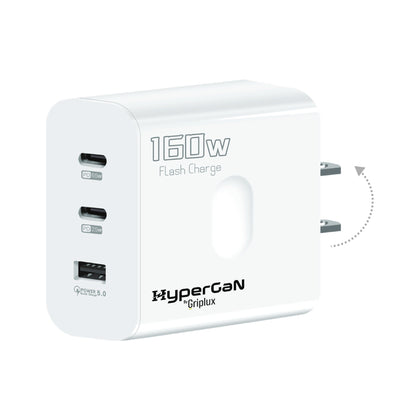
Check the watt-hours, expect about two-thirds of the rated capacity, and match the output to your phone's fast-charging standard. Pick 10,000 mAh for everyday use and 20,000 for travel. Browse the GripLux power bank collection and pair it with a good charger to refill it fast.
Frosted Black Ultra Thin Case Review
Car Phone Mounts Compared: Vent vs Dash vs Windshield vs MagSafe