

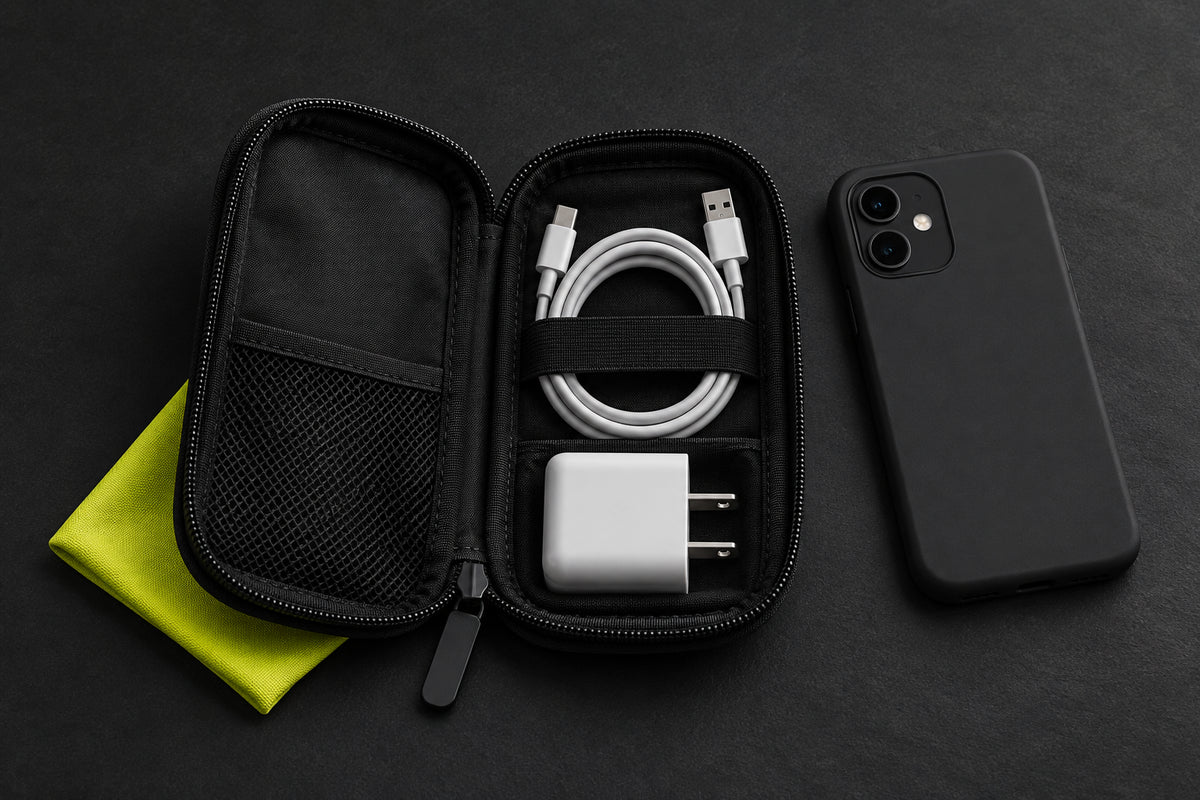
A bag full of spare cables can still leave you without the one you need. A compact phone-accessory pouch works better when every item has a specific job and the complete setup has been checked before you leave. The aim is a useful everyday kit, not a miniature drawer of forgotten electronics.
Start with a normal day away from home: a long appointment, a workday in another location or a visit where you may need to charge your phone. Longer travel, unfamiliar electrical systems and airline battery rules need their own preparation. This small kit is not a substitute for those checks.
Plan around one real day
Write down what you expect to do with the phone and where you expect to use it. Will you have a suitable wall outlet? Do you already carry a charger for another device? Will you need the phone upright on a table? Answering those questions is more useful than packing every accessory that fits in the pouch.
Separate essentials from optional extras. Your usual compatible charging cable may be essential; a second stand may not be. Do not remove an item you rely on just to make the pouch look tidy, but give each extra a reason to come along.
Pack for the phone you currently own. A cable or case left over from an earlier model may look familiar while serving a different connection or fit. Read the actual model and connector information rather than trusting the color or the memory of when you bought it.
Check the complete charging combination
Lay out the phone, cable and power adapter you intend to carry. Identify both ends of the cable and the port they will connect to. Keep compatibility, electrical ratings and condition checks tied to the manufacturers' instructions. Physical resemblance alone is not a reliable way to select charging equipment.
Before departure, try the intended combination in an ordinary suitable location and confirm the phone indicates charging. This is a practical preparation check, not a safety certification or proof of a particular charging speed. Do not continue using equipment that is damaged or behaves unusually; follow the manufacturer's guidance.
If cable specifications are confusing, our guide to cable watts and data speed explains why those are separate specifications. You do not need to buy the highest advertised number to assemble a sensible daily kit. You need equipment appropriate for the devices and tasks you actually have.
Give loose items a predictable place
Choose a pouch that holds the selected items without forcing the zipper or pressing hard objects into the phone. It need not be purpose-built or elaborate. A pocket you can identify by touch and an opening you can see into may be more useful than many tiny compartments.
Keep cables arranged without sharp bends or tight strain at their connectors. Follow their care instructions and use a suitable loose fastener if needed. Avoid letting a heavy adapter hang from a cable while you search the bag. The pouch is for carrying the equipment, not for operating a charger inside a closed compartment.
Put small detachable accessories in a consistent section. If you remove a grip or another attachment for a particular setup, decide where it goes before it is loose on a café table. A repeatable location is easier to remember than whichever pocket happens to be empty.
Decide whether a stand earns its space
A stand can be useful when you expect to read a document or join a call from a table. If those tasks are unlikely, leaving it out may simplify the kit. Try the setup on a stable surface before relying on it away from home, and keep the phone clear of an edge.
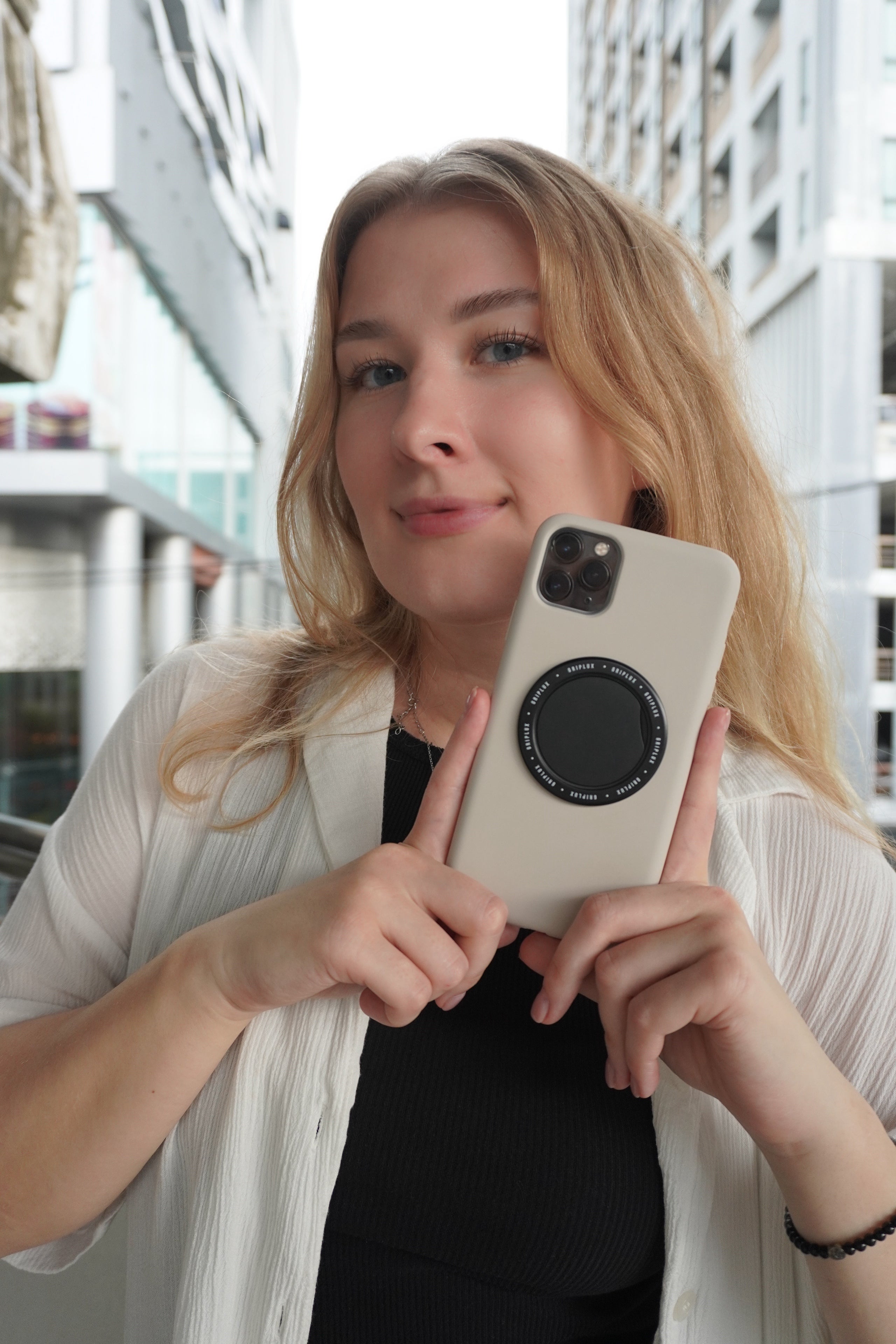
The GripLux Luxi Snap Grip listing describes a grip-and-stand accessory. Check its current details and compatibility with your phone and case before considering it. The product format does not mean every phone, case or orientation will behave identically.
An accessory is optional. You can complete the packing routine using the equipment you already own. Avoid adding another item solely because there is an empty loop in the pouch.
Rehearse unpacking, not just packing
Close the pouch, put it in the bag you will carry and then retrieve the charging setup. Can you identify the right cable without emptying everything? Can you set the unused pieces somewhere sensible? Does a small component fall out when the pouch opens?
Make one adjustment based on that rehearsal. A simpler arrangement is usually easier to assess than a complete redesign. Keep the phone and accessories away from drinks and avoid placing the kit where a cable would create an obstacle.
Reset the pouch when you get home
Return borrowed items to their normal places and replace anything removed from the daily kit. If a cable goes back to the desk, leave a short reminder to pack it next time rather than assuming the pouch is still complete.
Review the contents after several outings. Keep what you repeatedly use, reconsider what never leaves its pocket and investigate any recurring missing item. A dependable pouch is not the one with the most accessories. It is the one whose contents match your day and are ready when you need them.
Cover: conceptual accessory-packing illustration, not a depiction of a specific GripLux product or a recommended charging combination.


Keep One Useful Reference Note Pinned on Your iPhone
Turn a Vague Errand List into Clear iPhone Reminders