

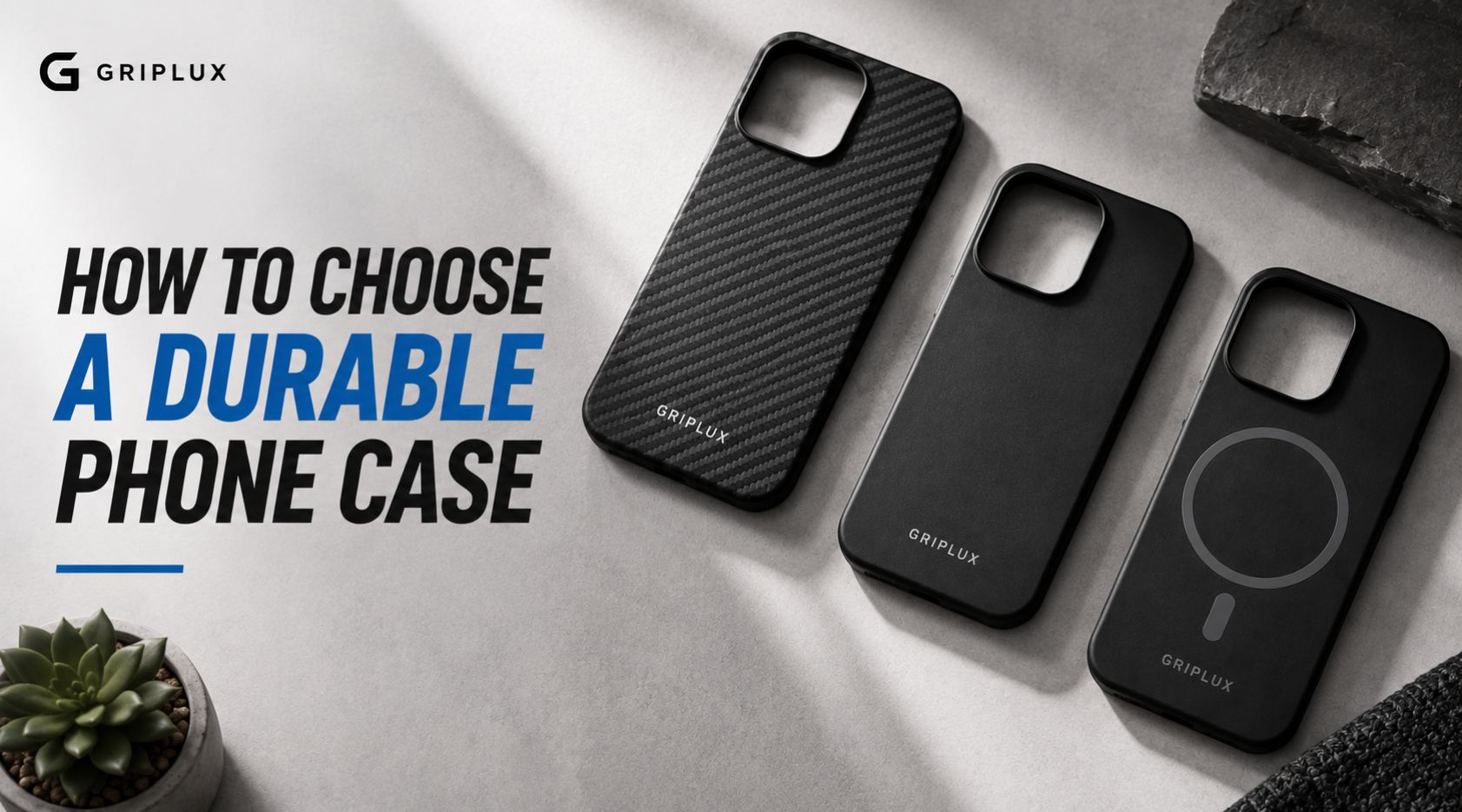
You've probably picked a phone case based on color before checking what it's actually made of. Most people have. Then the phone slips off a couch arm, the case does nothing, and suddenly "durable" stops being a marketing word and starts being something you actually care about.
Quick answer: A genuinely durable case comes down to three things - material, drop rating, and how well it fits your specific daily risks. Silicone and rubber cases handle everyday scuffs fine. Reinforced materials like aramid fiber (Kevlar) handle real drops. The "best" one depends on what you're actually protecting against, not which case looks toughest on the shelf.
Why "Durable" Doesn't Mean the Same Thing for Everyone
Here's the thing nobody tells you when you're shopping for a case: durability isn't one fixed quality, it's a trade-off. A case built to survive a 10-foot drop onto concrete is usually thicker, heavier, and less pocket-friendly than one built for everyday scuffs. Neither is "better" - they're built for different lives.
If you work a desk job and mostly worry about your phone sliding off a table, you don't need the same case as someone who drops their phone on a job site twice a week. Buying more durability than you need just means carrying more bulk than you need.
What Makes a Durable Phone Case?
A few specific things determine real-world durability, and none of them are the color or the price tag:
-
Material. Standard silicone absorbs light shock well but wears down over time and offers limited protection against repeated hard impacts. Aramid fiber (Kevlar) is known for its exceptional strength-to-weight ratio and is widely used in protective equipment, aerospace, and other high-performance applications, making it an excellent choice for durable phone cases.
-
Drop rating. A stated drop height (like 5 feet) gives you an actual benchmark instead of a vague "tough" claim. If a case doesn't list one, that's worth noticing.
-
Camera protection. A raised lip around the camera module matters more than people expect - it's the difference between your camera glass touching a table directly and not.
-
Corner and edge reinforcement. Most drops land on a corner, not flat on the back, so corner design matters as much as the material itself.
A Real-World Example
Picture two people with the same phone. One works construction and keeps their phone in a chest pocket all day - it gets dropped on concrete, brushed against tools, exposed to dust. The other works from a home office and mostly worries about it sliding off the couch during a Netflix binge.
The construction worker needs something like Griplux's Thin Kevlar 600D Case - rated for drops up to 5 feet, built from the same aramid fiber used in protective gear. The person at home is better served by something slimmer, like the Ultra Thin Case, which handles everyday scuffs without adding bulk they don't need.
Same phone, same word ("durable"), completely different right answer.
Comparing Durability Across Case Types
|
Case Type |
Best For |
Drop Protection |
Bulk |
|---|---|---|---|
|
Standard Silicone/Rubber |
Everyday scuffs, light drops |
Moderate |
Medium |
|
Ultra Thin |
Cosmetic protection, minimal bulk |
Light |
Very Low |
|
Kevlar 600D |
Job sites, active use, frequent drops |
High (5-ft rated) |
Low-Medium |
How to Choose the Right Durable Phone Case
-
Match the case to your actual habits, not your worst-case fear. If you've never cracked a screen in five years, you probably don't need maximum-rated protection.
-
Check for MagSafe compatibility if you use magnetic accessories. Not every "durable" case supports MagSafe charge-through properly.
-
Don't assume thicker always means tougher. Material quality matters more than raw thickness - a well-engineered thin case can outperform a poorly made bulky one.
-
Look at the coating, not just the shell. A water- and fingerprint-resistant coating affects how the case holds up cosmetically over time, separate from impact protection.
Frequently Asked Questions
What's the most durable phone case material?
Aramid fiber (Kevlar) offers the best strength-to-weight ratio of common case materials, which is why it's used in Griplux's reinforced case line rather than standard silicone or polycarbonate.
Do thicker cases always protect better?
Not necessarily. Material quality and design (like a raised camera lip and reinforced corners) matter more than raw thickness. A well-designed slim case can outperform a poorly made bulky one.
Is a drop-rated case actually tested, or is it just a marketing number?
Reputable brands test cases with multi-angle drops (flat, edge, corner) rather than a single perfect drop, simulating the kind of accidents that actually happen day to day. A stated drop height is a real benchmark, though results always depend on the specific surface and impact angle.
Can a durable case still be MagSafe compatible?
Yes. Reinforced materials like aramid fiber don't interfere with MagSafe's magnetic connection or wireless charging, since the fiber itself is non-conductive.
How do I know if I need a rugged case or a slim one?
Think about your last few close calls with your phone. If they were mostly slides off soft surfaces, a slim case is fine. If you've had real drops onto hard ground, a reinforced case is worth the extra bulk.
The Bottom Line
"Durable" isn't a single spec you can shop for - it's a match between the case and how you actually use your phone. Figure out your real risk level first, then pick the material and protection level that fits it, rather than assuming more protection is automatically the better choice.
Whether you need lightweight everyday protection or a case built for tougher environments, explore the Griplux collection to find the durable phone case that best fits your lifestyle.
Share:
Does MagSafe Charging Damage Battery Health?
Deep Purple Phone Case: Which Griplux Style Fits You?