

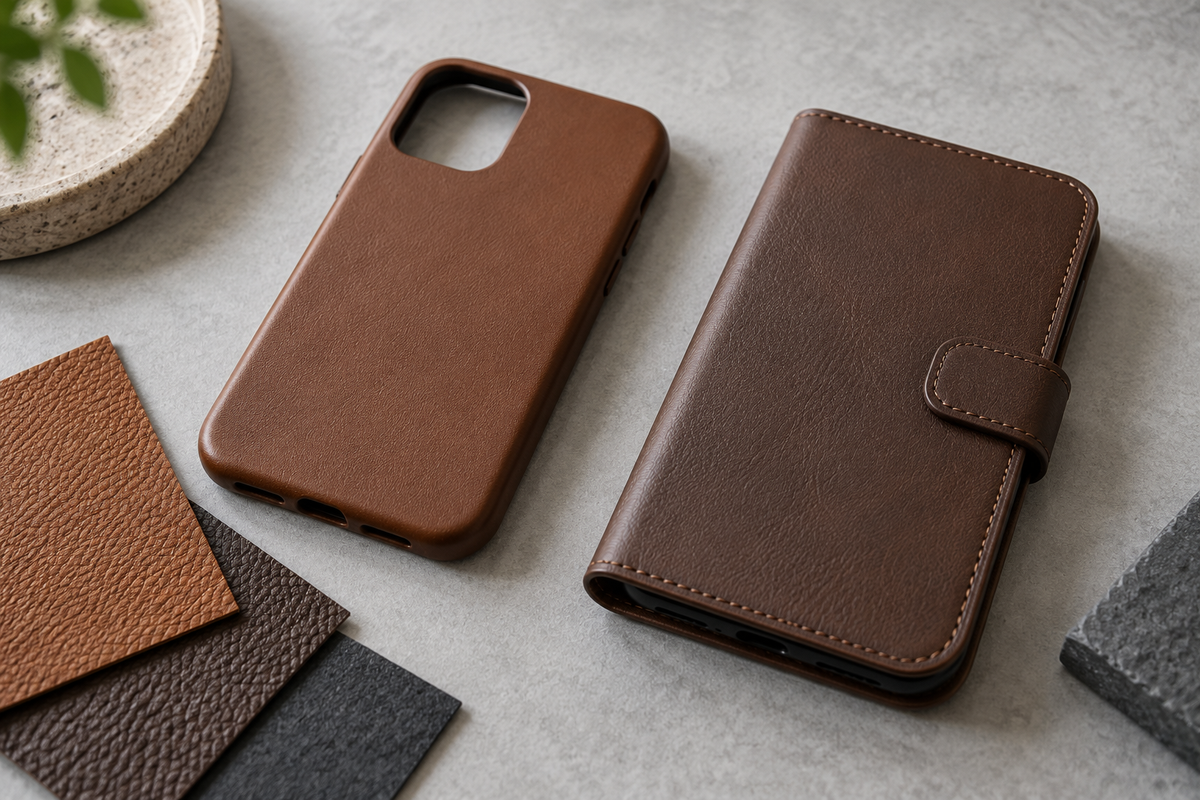
A brown, pebbled phone case can look convincingly leather-like in a product photo. That appearance does not tell you what it is made from. Before choosing between a PU-leather case and one described as genuine leather, read the material description as carefully as the color and phone-model options.
The useful question is specific: what covers the back, what supports it, and what information does the seller provide about the finished case? A short comparison based on those answers is more reliable than judging a grain pattern on a screen.
Start with the construction line
Product names often emphasize a style, while the specification list explains the construction. Read both. Look for the named outer material, the frame or shell, and any lining or separate wallet section. One material word may describe only part of the case.
For example, GripLux's Retro Leather Card Stand case lists PU leather and TPU construction. That is a different material description from the Plated-Edge Nappa case, whose listing specifies genuine leather with a Nappa texture and plated shell accents.
Use the details to distinguish the products. Do not turn “retro,” “Nappa texture” or a brown finish into an unstated claim about the source, grade or thickness of every component.
What PU tells you, and what it leaves open
PU stands for polyurethane. It is used in coatings that can create a leather-like surface. Materials manufacturer Covestro describes polyurethane synthetics and coatings designed to imitate leather's color, texture and feel.
That explains why appearance is a poor material test. It does not establish which supplier made a particular phone case, which backing it uses or how long that finished case will last. Covestro's descriptions of its own materials are not performance specifications for unrelated accessories.
If avoiding animal-derived materials matters to you, ask for a clear statement about the complete product, including its lining and other components. A two-letter abbreviation in a title is not the same as that complete answer.
Read “genuine leather” without adding extra promises
A genuine-leather description identifies the material the seller says is present. Read on for which part of the case it covers. If you want a particular hide type, construction or finish, look for that information explicitly or ask for it.
Do not infer a named leather grade, country of origin or hand-finishing process from the word “genuine” alone. Similarly, a soft-looking texture in a photograph cannot establish how the case will feel in your hand.
The Federal Trade Commission's Leather Guides summary emphasizes accurate composition descriptions and disclosure of non-leather content in material that looks like leather. For a shopper, the practical lesson is to seek a clear material statement rather than relying on resemblance.
Keep protection claims on their own line
Material choice is only one part of selecting a phone case. A leather-look surface does not, by itself, answer questions about drop protection, raised edges, button access or whether a particular accessory works with the case.
If a drop rating matters, ask for the stated test and the exact product it covers. If card storage matters, check the intended capacity and closure design. Compare those features separately from the outer finish so that a preferred look does not become a substitute for evidence.
Also check the selected phone variant before ordering. Cases with similar names can have different camera openings or other details across models. A material comparison is useful only after the options fit the phone you actually own.
Ask about care before reaching for a conditioner
Use the case maker's cleaning instructions for the exact finished product. Do not assume a leather conditioner, household cleaner or method used on shoes is suitable for a phone case with a coated surface, plated trim and several joined materials.
If the care instructions are missing, ask what cleaning method is approved and whether any products should be avoided. Remove the phone only as the case instructions permit, and keep cleaning liquids away from the device.
For a case you already own, keep a note of the material description and any care advice supplied. That makes a later cleaning question easier to answer without guessing from how the surface has aged.
Compare the answers, then choose the finish
A useful comparison has four short entries: stated outer material, supporting construction, care instructions and evidence for any performance claim you care about. Mark missing information as a question rather than filling it in yourself.
Neither category needs to win every comparison. Choose the case whose documented construction, features and care requirements suit your preferences. The important distinction is between what the listing actually says and what an attractive photograph makes you assume.
Cover: original conceptual illustration. The appearance of the illustrated cases and swatches does not identify their material composition.


Taking a Phone Charger Abroad? Check the Input Label Before Packing
Buying a Phone Case as a Gift: Confirm the Model Before the Color