

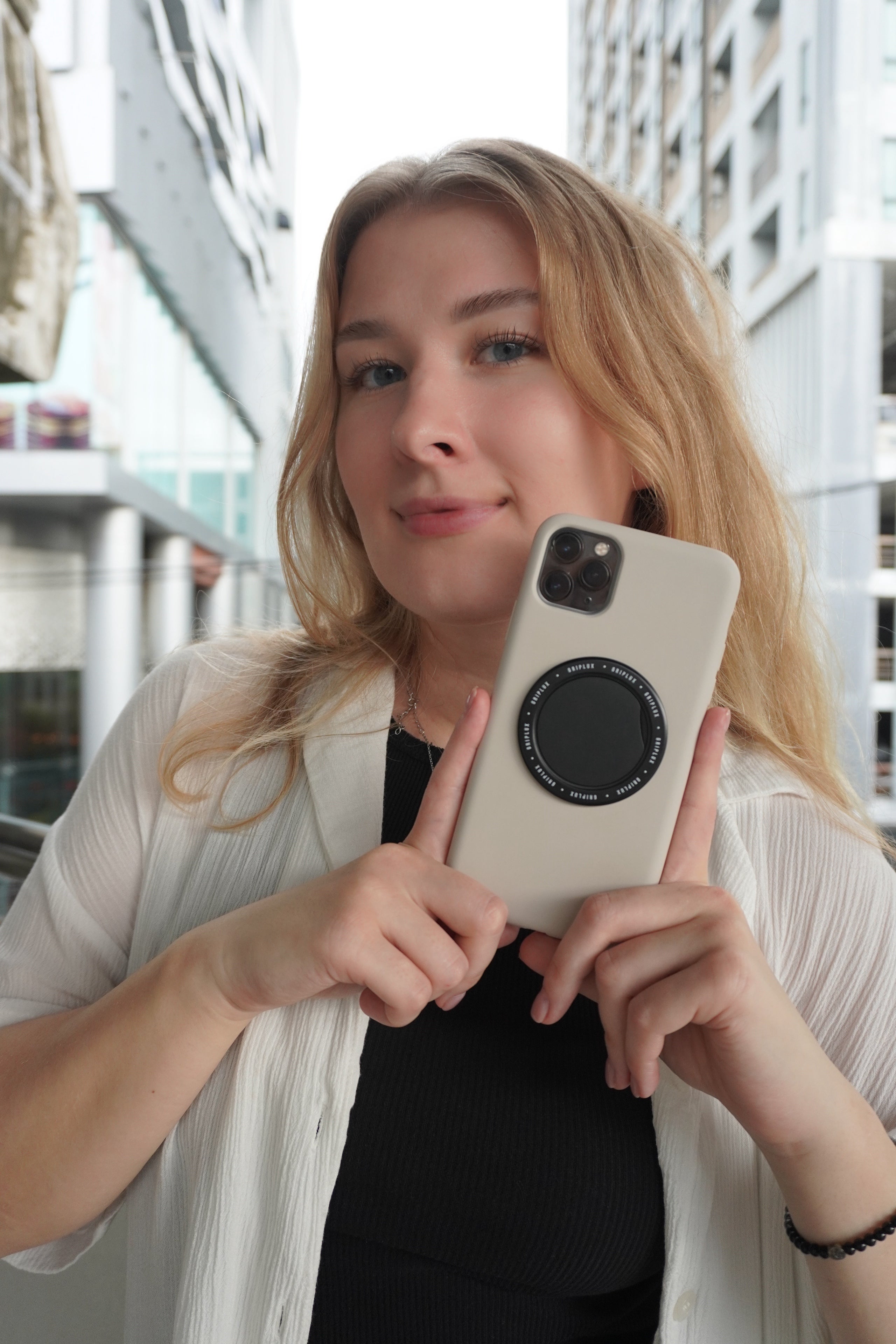
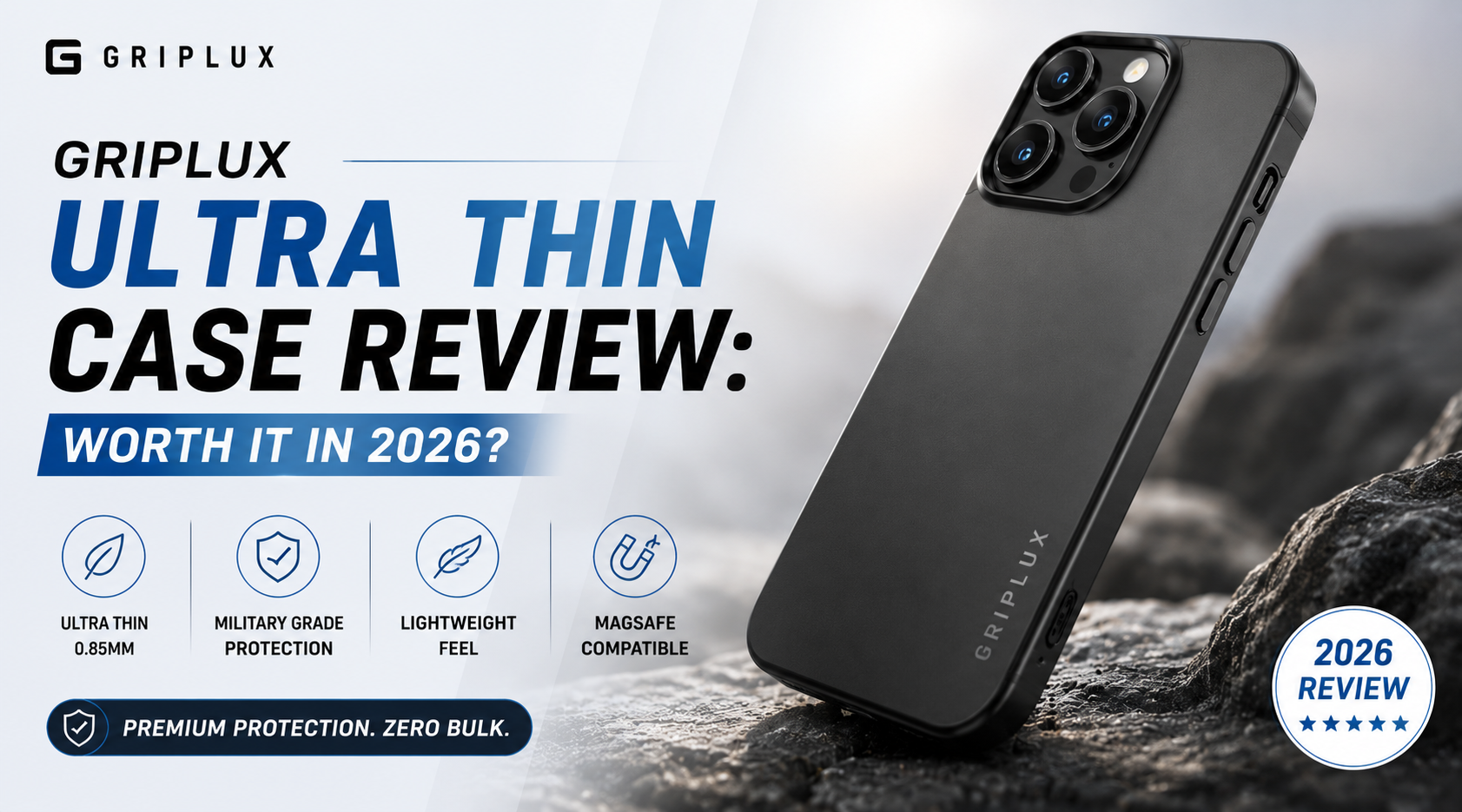
Somewhere in the last year, "how thin can a case actually be" became one of the most-searched questions in the phone accessory world. Part of that is the iPhone Air pushing the entire industry to think thinner, and part of it is a broader shift away from bulky, armor-style cases toward what people are calling the "naked phone" look - protection that disappears instead of announcing itself.
Griplux has its own answer to that shift: the Ultra Thin case, available across six colorways. We put it under a closer look to see how it actually holds up, and who it makes sense for.
The Trend Behind the Search
Search interest in minimalist and "barely-there" phone cases has climbed steadily through 2026, driven largely by phones themselves getting thinner and buyers wanting cases that match. Brands built entirely around this idea - cases measured in fractions of a millimeter, with zero logos and see-through finishes - have turned "how thin is too thin" into an actual debate, not just a marketing line.
The honest answer, and one worth stating upfront: the thinnest cases on the market right now measure well under a millimeter. The Griplux Ultra Thin case doesn't chase that extreme - it sits at 3.5mm, which is thin by mainstream standards but not the record-holder in the category. What it's aiming for instead is the more practical version of the trend: noticeably slimmer than a standard case, without cutting corners on the basics like camera protection and grip.
What's Actually in the Case
At 3.5mm thick and just 6 grams, the Ultra Thin case is built to add as little as possible to your phone's existing shape. A few details stand out once you actually handle one:
-
Precision cutouts for ports, buttons, and the camera module, cut tight enough that they don't feel like an afterthought
-
A raised camera lip, which matters more than it sounds—it's the difference between your camera glass touching a table directly or not
-
Zero branding on the back, keeping the phone's original design visible instead of covering it with a logo
-
Full MagSafe compatibility, so magnetic chargers, wallets, and grips still snap on properly
-
Six colorways - Solid Black, Frosted Black, Frosted White, Sierra Blue, Desert Gold, and Deep Purple
-
$29.99, with compatibility listed for iPhone, Samsung, and Google Pixel models
What It Feels Like Day to Day
The main thing people notice switching into an ultra-thin case is how much a phone's original shape comes back. Buttons feel closer to where your fingers expect them, the phone sits flatter in a pocket, and there's none of the "brick in your hand" feeling that comes with rugged cases. Customer feedback on the Sierra Blue and Frosted Black colorways specifically calls out how close the fit is to the phone's factory shape, with a couple of reviewers noting the finish held up well after a few months of daily use.
The trade-off, and it's the same trade-off every case in this category makes, is protection level. This isn't a case built to survive a drop onto concrete from shoulder height - it's built to handle the everyday stuff: desk scuffs, pocket friction, the occasional slip onto a carpeted floor. If your phone regularly takes hard drops, a case like Griplux's Kevlar 600D is the better fit. If your day-to-day risk is mostly cosmetic wear and the occasional soft drop, the Ultra Thin case is doing exactly what it's designed for.
Where It Sits Against the "Naked Phone" Trend
Compared to the most extreme minimalist cases on the market - the ones measured in fractions of a millimeter - the Ultra Thin case is a middle-ground option rather than a record-setter. That's arguably the more usable choice for most people: those ultra-extreme cases tend to trade away structural protection almost entirely to hit their thickness numbers, while the Ultra Thin case's raised camera lip and precision cutouts mean it's still doing real protective work.
If you're chasing the absolute thinnest case that exists, this isn't it, and it wouldn't be honest to claim otherwise. If you want the look and feel of the minimalist trend with a bit more actual coverage, this is squarely in that range.
Who Should Buy the Ultra Thin Case
-
You like your phone's original design and don't want a case that hides it
-
You want MagSafe accessories to keep working without buying a special adapter
-
Your daily risk is scuffs and soft drops, not job-site or active-lifestyle abuse
-
You want a case that comes in more than one or two colors without paying a premium for it
Who Should Look Elsewhere
-
If you drop your phone often or work in a physically demanding job, the added durability of a case like Griplux's Kevlar 600D will serve you better long-term
-
If you specifically want the absolute thinnest case available regardless of protection trade-offs, this sits in the middle of that spectrum rather than the extreme end
What to Look for in Any Ultra-Thin Case
If the Ultra Thin case isn't the right fit, or you're comparing it against other minimalist options, a few things separate a genuinely good thin case from one that just looks good in photos:
-
A raised camera lip is non-negotiable. Without one, your camera glass makes direct contact with any surface you set the phone on face-down, and that's how camera scratches happen.
-
Cutout precision matters more as cases get thinner. A loose or slightly misaligned cutout is far more noticeable on a 3.5mm case than a 2mm-thicker one, since there's less material to hide the gap.
-
Check whether MagSafe is genuinely supported, not just "compatible in theory." Some ultra-thin cases weaken magnetic hold enough that accessories don't snap on securely.
-
Material matters for how it ages. Cheaper thin cases can pick up a yellow tint or feel tacky after a few months in sunlight - worth checking return policies if you're trying an unfamiliar brand.
The Bottom Line
The "naked phone" trend isn't going away - if anything, thinner phone designs are pushing it further. What the Griplux Ultra Thin case gets right is treating that trend as a starting point rather than the whole pitch: it's slim enough to feel like the minimalist look people are searching for, without stripping out the details - the camera lip, the precision cutouts, the MagSafe support - that make a case worth using every day instead of just looking good in a product photo.
Frequently Asked Questions
Does the Ultra Thin case protect against drops?
It protects against everyday scuffs, scratches, and minor drops, but it isn't built for high-impact drops the way a reinforced case is. For heavy daily use, a thicker case is the safer choice.
Will it work with MagSafe chargers and accessories?
Yes. The case is fully MagSafe compatible, so wireless chargers, magnetic wallets, and grips attach the same way they would on a case-free phone.
Does it come in enough colors to match different styles?
Yes - six colorways are currently available, ranging from neutral tones like Solid Black and Frosted White to Sierra Blue and Deep Purple for more color.
Is a 3.5mm case actually noticeable when using the phone?
Most people report it feels close to using the phone without a case at all, especially compared to standard 1-2mm-thicker cases.
How does it compare to the extreme ultra-thin cases advertised at under 1mm?
Those cases are thinner, but generally trade away structural features like a raised camera lip for that extra slimness. The Ultra Thin case aims for a middle ground - noticeably slim, while keeping practical protection features intact.
Shop the Griplux Ultra Thin Case →
Share:
Military Grade Phone Case Drop Test: Does 5-Foot Protection Matter?
Best Back-to-School Phone Accessories 2026